Lassen Volcanic National Park Highway Historic District

Why it's listed
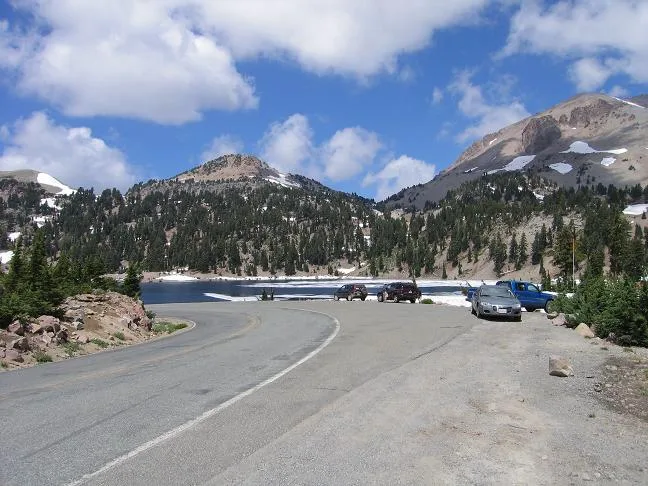
Lassen Volcanic National Park Highway is a 29.86-mile road linking the park's southwest and northwest entrances. It climbs from 6,646 feet to 8,511 feet near Lassen Peak, then descends toward Manzanita Lake, crossing geothermal areas, subalpine forests, meadows and lava fields. National Park Service engineers laid out the alignment in 1924-25 to show automobile tourists the park's most scenic and geologically interesting places, and the Bureau of Public Roads took over much of the construction after a 1926 agreement. Civilian Conservation Corps projects continued until 1941, and paving and widening followed between 1948 and 1951. Scenic pullouts, masonry culvert headwalls, bridge culverts, entrance pylons and the northwest entrance station were built from native materials to blend with the surroundings. Grades never exceed six percent. The road is listed as an intact early example of national park road design, and it remains the main way visitors experience the park.
Machine-generated summary. This summary was generated by a language model from the official nomination document and has not been reviewed line by line by an editor. It may contain errors. Check the source document before relying on any detail. Source: nomination document (PDF) · catalog entry. Generated October 2026 (model claude-sonnet-5-5, prompt v1.0-2026-10-29).
| Period of significance | 1925-1941 and 1948-1951 |
|---|---|
| Styles | Other: NPS Rustic |
| Areas of significance | Entertainment/Recreation, Architecture, Landscape Architecture, Community Planning and Development |
| Acreage | 290 |
| Boundary source | NPS cultural-resource GIS polygon |
| Full listing page | Lassen Volcanic National Park Highway Historic District (property record) |
What listing means for this property
This is a historic district. Buildings within its boundary are either contributing (they add to the district's significance) or non-contributing. Owners of contributing income-producing buildings can claim the 20% federal rehabilitation tax credit; homeowners should look at state credits. National Register districts impose no design review by themselves; a local historic district ordinance, if one exists, does (the difference explained).
General information, not legal or tax advice. Rules change; confirm with your State Historic Preservation Office or a qualified adviser.