Knights Ferry

Why it's listed
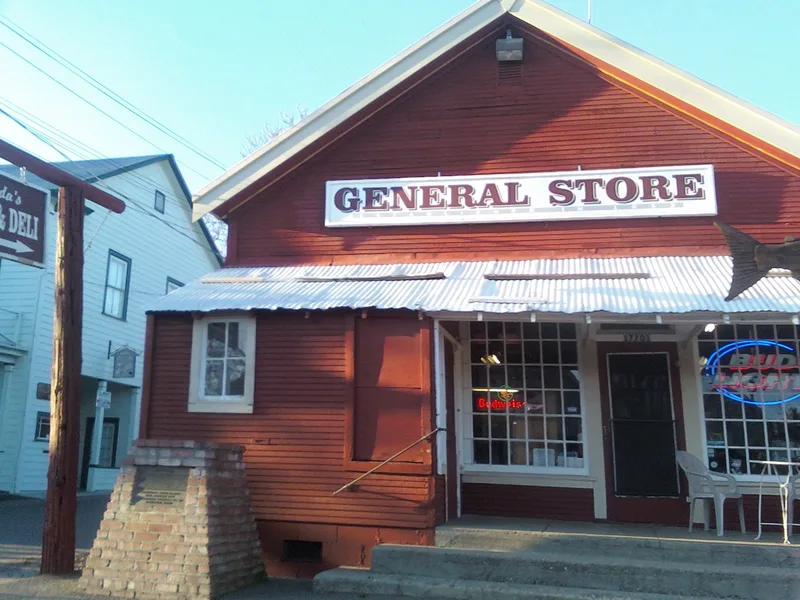
Knights Ferry is a small Gold Rush river town on the Stanislaus River, where the river leaves its canyon and heads toward the Central Valley. William Knight set up a trading post and ferry here, and gold traffic and nearby placer mining made it a major crossing and commercial center in the 1850s. It was the Stanislaus County seat from 1862 to 1872. Main Street and the terraced hillside behind it still hold buildings from that era, among them the hotel, the General Store operating since 1852, the Odd Fellows hall, Gothic Revival houses and two Classical Revival buildings built by Abraham Schell. At the east end stand the ruins of David Tulloch's 1862 stone grist mill beside the long covered bridge built after the 1862 flood. Floods, alterations and a few mobile homes have affected the setting, yet the district keeps much of the feeling of an early mining and trading town.
Machine-generated summary. This summary was generated by a language model from the official nomination document and has not been reviewed line by line by an editor. It may contain errors. Check the source document before relying on any detail. Source: nomination document (PDF) · catalog entry. Generated October 2026 (model claude-sonnet-5-5, prompt v1.0-2026-10-29).
| Styles | Vernacular with Greek Revival and Gothic Revival elements; Classical Revival (Schell buildings) |
|---|---|
| Areas of significance | Other, Commerce, Politics/Government, Architecture |
| Acreage | 107 |
| Boundary source | NPS cultural-resource GIS polygon |
| Full listing page | Knights Ferry (property record) |
What listing means for this property
This is a historic district. Buildings within its boundary are either contributing (they add to the district's significance) or non-contributing. Owners of contributing income-producing buildings can claim the 20% federal rehabilitation tax credit; homeowners should look at state credits. National Register districts impose no design review by themselves; a local historic district ordinance, if one exists, does (the difference explained).
General information, not legal or tax advice. Rules change; confirm with your State Historic Preservation Office or a qualified adviser.