Keys Desert Queen Ranch

Why it's listed
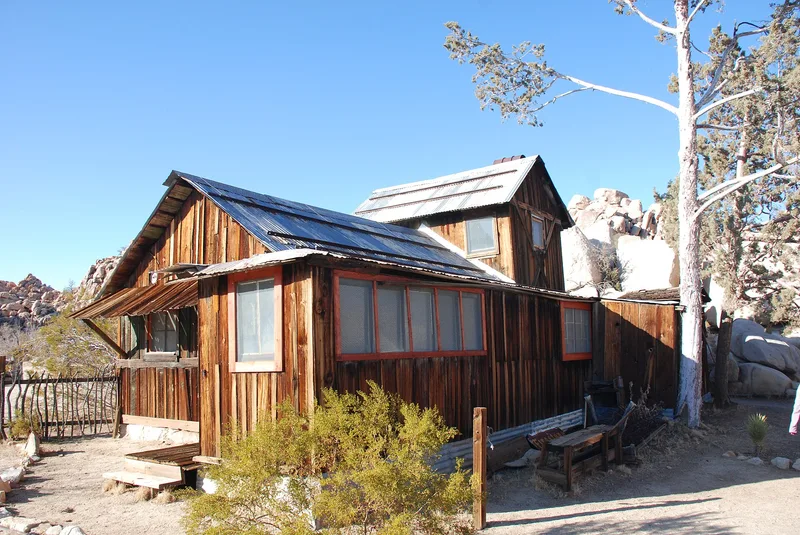
Keys' Desert Queen Ranch is a desert homestead complex southwest of Twentynine Palms, within Joshua Tree National Monument. It includes a two-story frame ranch house, a school house, a guest house, a tack house made from two cyanide tanks, an arrastra, an ore-loading hopper, a windmill, a cemetery, several dams and a large collection of mining and farm machinery. Bill McHaney began the ranch about 1894 with three adobe buildings, and only a fragment of his adobe barn survives. William F. Keys settled in the area after 1910, took over the ranch and built most of the wood-frame buildings from salvaged materials. He ran cattle and livestock, grew fruit, mined, and built dams to capture rainwater. He expanded the homestead from 80 to 240 acres, raised seven children there and arranged teaching on site. The ranch was listed for what it shows of ranching and mining life in the high desert between 1894 and 1969.
Machine-generated summary. This summary was generated by a language model from the official nomination document and has not been reviewed line by line by an editor. It may contain errors. Check the source document before relying on any detail. Source: nomination document (PDF) · catalog entry. Generated October 2026 (model claude-sonnet-5-5, prompt v1.0-2026-10-29).
| Period of significance | 1894 - 1969 |
|---|---|
| Areas of significance | Industry, Agriculture |
| Acreage | 160 |
| Boundary source | NPS cultural-resource GIS polygon |
| Full listing page | Keys Desert Queen Ranch (property record) |
What listing means for this property
This is a historic district. Buildings within its boundary are either contributing (they add to the district's significance) or non-contributing. Owners of contributing income-producing buildings can claim the 20% federal rehabilitation tax credit; homeowners should look at state credits. National Register districts impose no design review by themselves; a local historic district ordinance, if one exists, does (the difference explained).
General information, not legal or tax advice. Rules change; confirm with your State Historic Preservation Office or a qualified adviser.