Key, George, Ranch

The National Park Service has not published a boundary polygon for this district; the map shows the listed properties inside it and the district's reference point.
Why it's listed
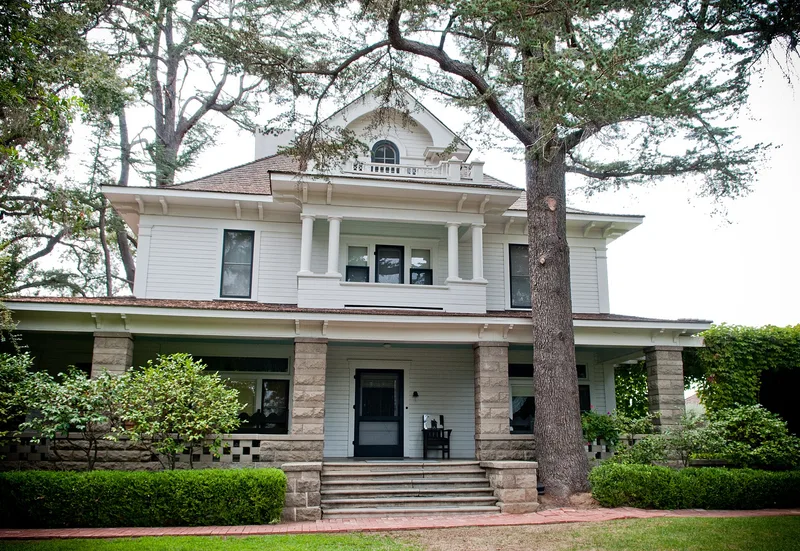
This 2.25-acre citrus ranch in Placentia, Orange County, preserves the home, grounds and outbuildings of rancher George Benn Key, who bought his first 20 acres in 1893. He built the two-story frame house in 1898 and remodeled it about 1908 with pillared porches, a stone-columned trellis, fireplaces and hand-carved woodwork. A garage dates to 1908 and a tractor shed to 1945. Gardens, old trees and surrounding orange groves give the property a rural setting. Key worked as superintendent of an early Valencia orange ranch and helped organize the Placentia Orange Growers Exchange, a leading packing house whose growers used the Sunkist label. The ranch holds extensive collections of farming and equestrian equipment, citrus labels and family memorabilia displayed in a museum-like setting. The nomination presents it as the best surviving example of an early Orange County orange ranch and of the way of life that accompanied the citrus industry.
Machine-generated summary. This summary was generated by a language model from the official nomination document and has not been reviewed line by line by an editor. It may contain errors. Check the source document before relying on any detail. Source: nomination document (PDF) · catalog entry. Generated October 2026 (model claude-sonnet-5-5, prompt v1.0-2026-10-29).
| Period of significance | 19th and 20th Century; built 1898, remodeled 1908 and 1945 |
|---|---|
| Styles | 1900 American Victorian |
| Areas of significance | Landscape Architecture, Agriculture, Architecture |
| Acreage | 2.3 |
| Boundary source | not published |
| Full listing page | Key, George, Ranch (property record) |
What listing means for this property
This is a historic district. Buildings within its boundary are either contributing (they add to the district's significance) or non-contributing. Owners of contributing income-producing buildings can claim the 20% federal rehabilitation tax credit; homeowners should look at state credits. National Register districts impose no design review by themselves; a local historic district ordinance, if one exists, does (the difference explained).
General information, not legal or tax advice. Rules change; confirm with your State Historic Preservation Office or a qualified adviser.