Hunters Point Commercial Drydock Historic District

Why it's listed
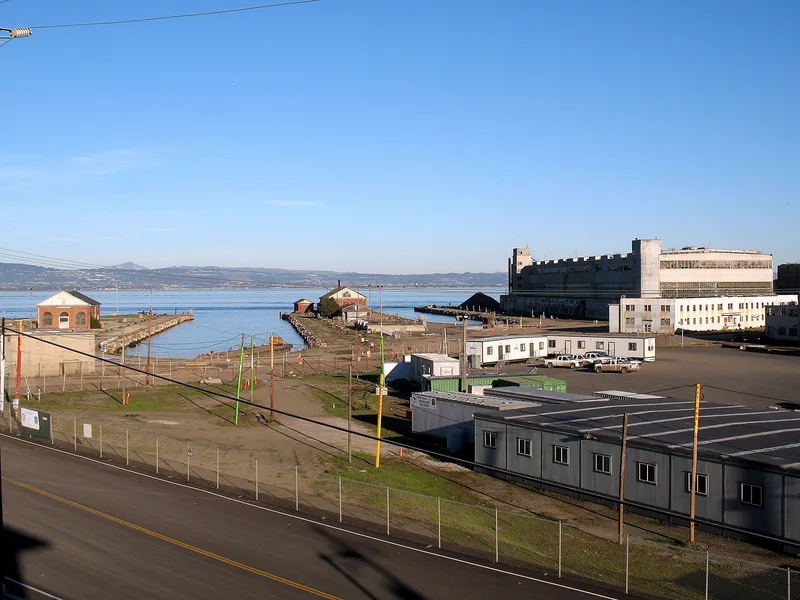
At the eastern tip of the former Hunters Point Naval Shipyard in San Francisco, two parallel concrete drydocks and several support buildings make up a surviving early twentieth-century ship repair complex. Drydock 2, built 1901-1903, is 750 feet long; Drydock 3, built 1916-1918, is 1,005 feet long. Between and beside them stand pump houses and related buildings, mostly of brick with gable roofs and Neoclassical Revival details such as pilasters, half-round arches and modillioned cornices. Building 205 housed steam-driven pumping equipment for the earlier drydocks, while Building 140, designed by engineer Howard C. Holmes, held electric motors driving six centrifugal pumps made by Byron-Jackson Iron Works. Together they show the technological change between the two construction periods. Six resources contribute to the district, including a utilitarian 1930s latrine. Later Navy-era capstans, crane tracks and bollards have been heavily altered and do not contribute. The drydocks are now non-operational.
Machine-generated summary. This summary was generated by a language model from the official nomination document and has not been reviewed line by line by an editor. It may contain errors. Check the source document before relying on any detail. Source: nomination document (PDF) · catalog entry. Generated October 2026 (model claude-sonnet-5-5, prompt v1.0-2026-10-29).
| Styles | Neoclassical Revival |
|---|---|
| Areas of significance | Commerce, Industry, Engineering, Architecture |
| Acreage | 19 |
| Boundary source | NPS cultural-resource GIS polygon |
| Full listing page | Hunters Point Commercial Drydock Historic District (property record) |
What listing means for this property
This is a historic district. Buildings within its boundary are either contributing (they add to the district's significance) or non-contributing. Owners of contributing income-producing buildings can claim the 20% federal rehabilitation tax credit; homeowners should look at state credits. National Register districts impose no design review by themselves; a local historic district ordinance, if one exists, does (the difference explained).
General information, not legal or tax advice. Rules change; confirm with your State Historic Preservation Office or a qualified adviser.