Hillcrest Park

Why it's listed
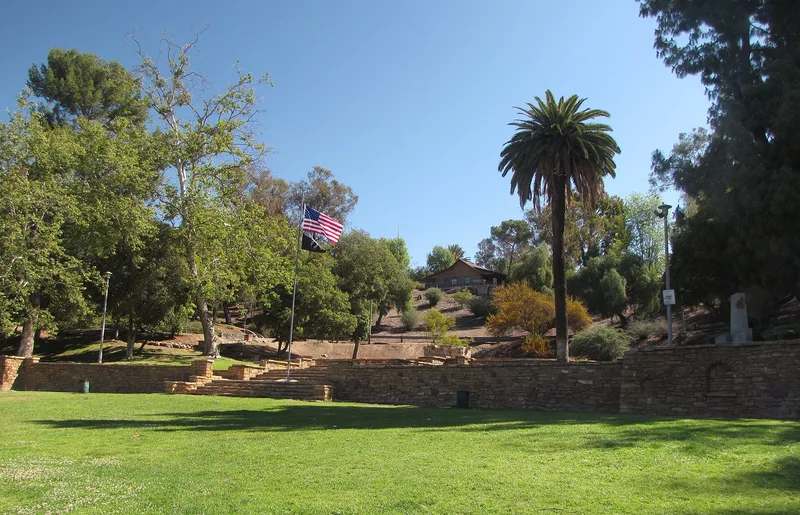
Hillcrest Park is Fullerton's largest and most historically significant park, covering 35.6 hilly acres near the city center. The city bought the land in 1920, and park superintendent Johann George Seupelt, a Bavarian-born horticulturist and landscape architect, drew up the plans. Roads and trails were laid out by mule team and plow in 1923-24, and the park was dedicated in May 1924. Between 1931 and 1941, relief workers funded by programs such as the RFC, CWA, SERA and WPA built much of its character by hand, using flagstone for stairs, walls, benches, barbecues, a bridge and a 1936 electric fountain. The park also holds the city's first reservoir, built in 1922, plus picnic areas, a turf bowl and a recreation center built as an American Legion post. It retains its original design intent, vistas and circulation, and it was designated a local landmark in 1980. The nominated area is the original acreage.
Machine-generated summary. This summary was generated by a language model from the official nomination document and has not been reviewed line by line by an editor. It may contain errors. Check the source document before relying on any detail. Source: nomination document (PDF) · catalog entry. Generated October 2026 (model claude-sonnet-5-5, prompt v1.0-2026-10-29).
| Areas of significance | Entertainment/Recreation, Social History, Landscape Architecture |
|---|---|
| Acreage | 35.6 |
| Boundary source | NPS cultural-resource GIS polygon |
| Full listing page | Hillcrest Park (property record) |
What listing means for this property
This is a historic district. Buildings within its boundary are either contributing (they add to the district's significance) or non-contributing. Owners of contributing income-producing buildings can claim the 20% federal rehabilitation tax credit; homeowners should look at state credits. National Register districts impose no design review by themselves; a local historic district ordinance, if one exists, does (the difference explained).
General information, not legal or tax advice. Rules change; confirm with your State Historic Preservation Office or a qualified adviser.