Highland-Camrose Bungalow Village

The National Park Service has not published a boundary polygon for this district; the map shows the listed properties inside it and the district's reference point.
Why it's listed
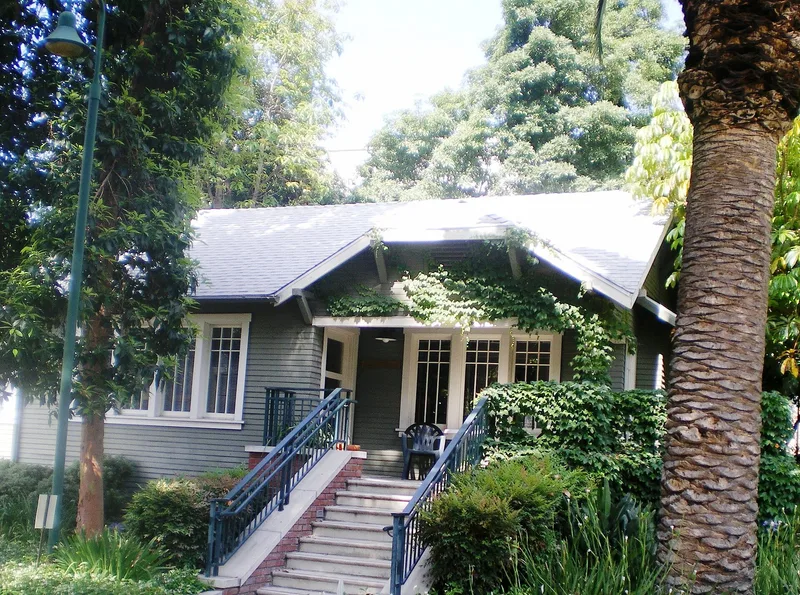
Highland-Camrose Bungalow Village is a cluster of fourteen houses and two garages spread over 1.6 acres of hillside and flat ground in Los Angeles. Horace W. Field bought the land in 1914-1915 and developed the group between 1916 and 1924. Most of the houses were built by contractor Lee Campbell, with others by George L. Field and the Taylor Brothers, whose 2111 house is thought to have shaped the style of the rest. The buildings are Craftsman bungalows with low gable roofs, clipped porch gables, exposed rafters, knee brackets, clapboard siding and brick chimneys, plus one Dutch Colonial Revival house with a gambrel roof. Pathways, stone walls and mature plantings tie them together. The nomination values the village as the only known clustered hillside bungalow development remaining in the Los Angeles area, a looser alternative to the symmetrical bungalow court. It also housed people working in the nearby Hollywood film industry, served by a trolley line on Highland Avenue.
Machine-generated summary. This summary was generated by a language model from the official nomination document and has not been reviewed line by line by an editor. It may contain errors. Check the source document before relying on any detail. Source: nomination document (PDF) · catalog entry. Generated October 2026 (model claude-sonnet-5-5, prompt v1.0-2026-10-29).
| Period of significance | 1916-1924 |
|---|---|
| Styles | Bungalow/Craftsman |
| Areas of significance | Architecture |
| Acreage | 1.6 |
| Boundary source | not published |
| Full listing page | Highland-Camrose Bungalow Village (property record) |
What listing means for this property
This is a historic district. Buildings within its boundary are either contributing (they add to the district's significance) or non-contributing. Owners of contributing income-producing buildings can claim the 20% federal rehabilitation tax credit; homeowners should look at state credits. National Register districts impose no design review by themselves; a local historic district ordinance, if one exists, does (the difference explained).
General information, not legal or tax advice. Rules change; confirm with your State Historic Preservation Office or a qualified adviser.