Harmony Borax Works

Why it's listed
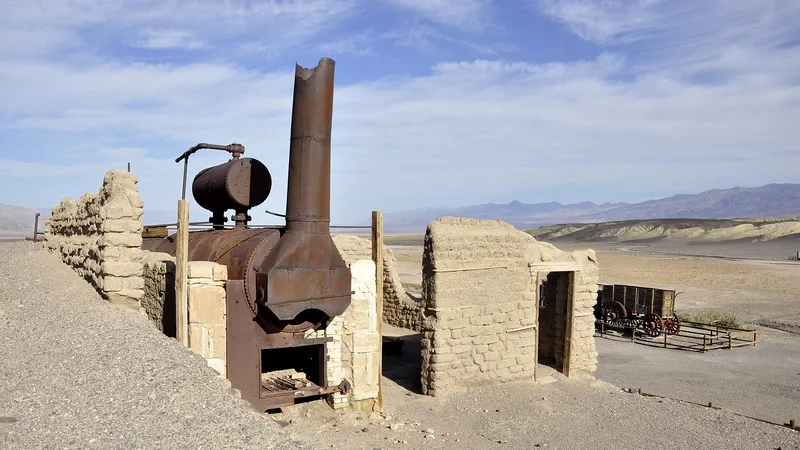
Harmony Borax Works is a 185-acre district of ruins at the mouth of Furnace Creek in Death Valley, California. Borax was found nearby in 1881, and San Francisco businessman W.T. Coleman began production around 1883 or 1884. Chinese laborers gathered the raw cottonball ore, and local Indians and some whites collected mesquite for fuel. The processing plant included a water system fed from Texas Spring, a boiler, a furnace, dissolving tanks and many cooling vats. Crystallized borax was sacked and hauled by mule-drawn wagons to the railhead at Mojave. The works closed in 1888 when Coleman's finances collapsed, and it later became part of the borax reserves of Pacific Coast Borax Company. The site is linked to the 20-mule team image, later used by Stephen T. Mather in sales promotion. Today only parts of the furnace, boiler, tanks and two adobe structures remain, forming the best preserved borax remains within the National Park Service.
Machine-generated summary. This summary was generated by a language model from the official nomination document and has not been reviewed line by line by an editor. It may contain errors. Check the source document before relying on any detail. Source: nomination document (PDF) · catalog entry. Generated October 2026 (model claude-sonnet-5-5, prompt v1.0-2026-10-29).
| Period of significance | 1883-1888 |
|---|---|
| Areas of significance | Industry, Commerce, Transportation |
| Acreage | 185 |
| Boundary source | NPS cultural-resource GIS polygon |
| Full listing page | Harmony Borax Works (property record) |
What listing means for this property
This is a historic district. Buildings within its boundary are either contributing (they add to the district's significance) or non-contributing. Owners of contributing income-producing buildings can claim the 20% federal rehabilitation tax credit; homeowners should look at state credits. National Register districts impose no design review by themselves; a local historic district ordinance, if one exists, does (the difference explained).
Noted as vacant in the nomination. Nomination documents can be decades old; current status may differ. If you are considering buying an empty listed property, read the due-diligence checklist.
General information, not legal or tax advice. Rules change; confirm with your State Historic Preservation Office or a qualified adviser.