Greenmeadow

Why it's listed
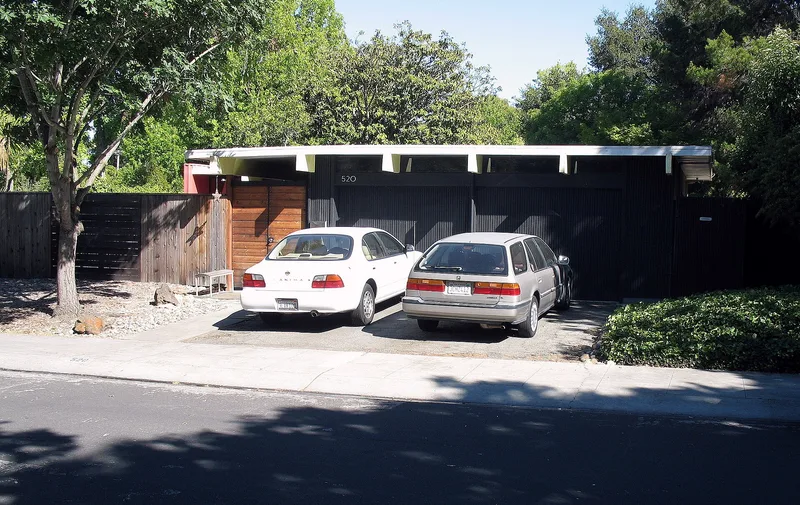
Greenmeadow is a planned neighborhood of 243 single-story houses in southern Palo Alto, built in 1954 and 1955 by Eichler Homes on about 73 acres of its own land. The houses were designed by the firm of A. Quincy Jones and Frederick Emmons in the Mid-Century Modern style, with exposed post-and-beam construction, slab-on-grade foundations, redwood plywood siding, and floor-to-ceiling glass at the rear. Street fronts are nearly blank to preserve privacy, and each house has a front-facing two-car garage. Six model types appear across the district. A 2.9-acre community center with a multi-purpose building, pool buildings, pool and park sits at its center, and Thomas Church designed the original redwood landscaping. Eichler stood out among postwar builders by consistently offering architect-designed modern homes to middle-class buyers despite resistance from lenders. About 92 percent of the buildings still contribute to the district's character, helped by an active architectural review committee.
Machine-generated summary. This summary was generated by a language model from the official nomination document and has not been reviewed line by line by an editor. It may contain errors. Check the source document before relying on any detail. Source: nomination document (PDF) · catalog entry. Generated October 2026 (model claude-sonnet-5-5, prompt v1.0-2026-10-29).
| Styles | Other: Mid-Century Modern; Modern Movement |
|---|---|
| Areas of significance | Architecture |
| Acreage | 73 |
| Boundary source | NPS cultural-resource GIS polygon |
| Full listing page | Greenmeadow (property record) |
What listing means for this property
This is a historic district. Buildings within its boundary are either contributing (they add to the district's significance) or non-contributing. Owners of contributing income-producing buildings can claim the 20% federal rehabilitation tax credit; homeowners should look at state credits. National Register districts impose no design review by themselves; a local historic district ordinance, if one exists, does (the difference explained).
General information, not legal or tax advice. Rules change; confirm with your State Historic Preservation Office or a qualified adviser.