Green Gables

Why it's listed
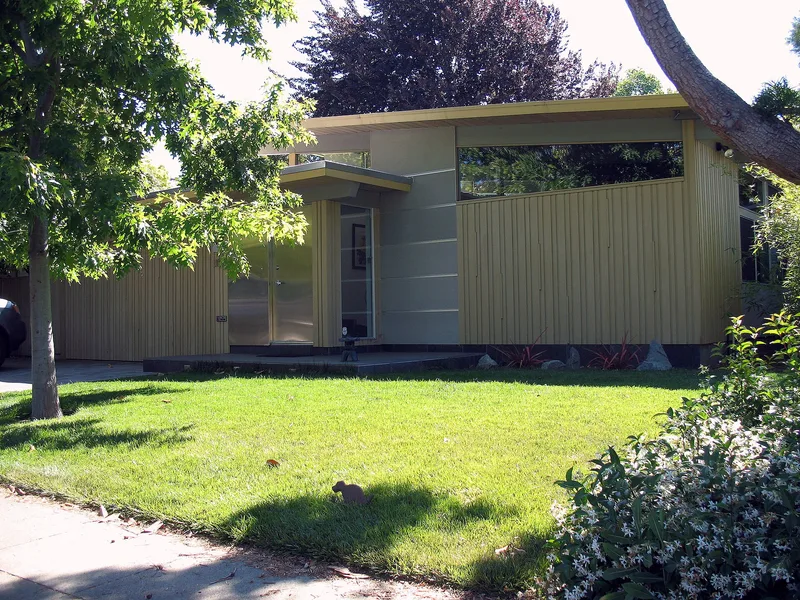
Green Gables is a Palo Alto subdivision of 63 single-story houses built in 1950 by developer Joseph Eichler. Located along Channing Avenue, Ivy Lane, Greer Road and Wildwood Lane, the homes use slab-on-grade post-and-beam construction, redwood siding, flat or gently sloping rooflines, wide overhangs, brick fireplaces and floor-to-ceiling glass facing rear patios. Two plans were offered, one with a garage and one with a carport, and interiors followed an open plan inspired by Frank Lloyd Wright's Usonian houses. The subdivision was listed for architecture because it is a well-preserved early example of Mid-Century Modern tract housing. 1950 was the first year Eichler hired the architectural firm of Robert Anshen and Steve Allen, at a time when few merchant builders used architects. A survey scoring alterations such as second stories, replaced siding and changed garage doors classed most houses as contributing and the rest as non-contributing. Sidewalks, curbs and street lighting remain intact.
Machine-generated summary. This summary was generated by a language model from the official nomination document and has not been reviewed line by line by an editor. It may contain errors. Check the source document before relying on any detail. Source: nomination document (PDF) · catalog entry. Generated October 2026 (model claude-sonnet-5-5, prompt v1.0-2026-10-29).
| Period of significance | 1950 |
|---|---|
| Styles | Other: Mid-Century Modern; Modern Movement |
| Areas of significance | Architecture |
| Acreage | 17 |
| Boundary source | NPS cultural-resource GIS polygon |
| Full listing page | Green Gables (property record) |
What listing means for this property
This is a historic district. Buildings within its boundary are either contributing (they add to the district's significance) or non-contributing. Owners of contributing income-producing buildings can claim the 20% federal rehabilitation tax credit; homeowners should look at state credits. National Register districts impose no design review by themselves; a local historic district ordinance, if one exists, does (the difference explained).
General information, not legal or tax advice. Rules change; confirm with your State Historic Preservation Office or a qualified adviser.