Grand Boulevard Historic District

Why it's listed
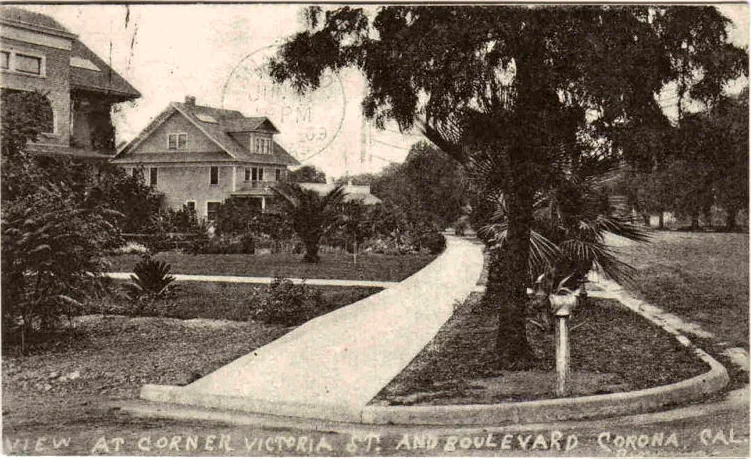
Grand Boulevard is a circular roadway in Corona, California, laid out in 1886 about 40 miles east of Los Angeles. The ring measures one mile across with a 100-foot-wide right-of-way, and it surrounds a grid of interior streets while exterior streets meet its outer edge at various angles. The district includes the roadway, intersecting streets and alleys, driveways, curbs and gutters, parkways, sidewalks, street trees, historic streetlights, a granite hitching post and two pocket parks. Palms, silk oaks, peppers, eucalyptus and other trees line much of the circle, and 146 historic-style lamps remain from a late-1920s lighting project. The roadway was originally dirt, later oiled and paved. A monument marks the start and finish line of the 1913, 1914 and 1916 Corona road races. Location, design, setting and association remain strong, though the State Route 91 bridges, widening and new signals have altered the northern section.
Machine-generated summary. This summary was generated by a language model from the official nomination document and has not been reviewed line by line by an editor. It may contain errors. Check the source document before relying on any detail. Source: nomination document (PDF) · catalog entry. Generated October 2026 (model claude-sonnet-5-5, prompt v1.0-2026-10-29).
| Styles | Other: Landscaped Boulevard |
|---|---|
| Areas of significance | Landscape Architecture, Community Planning and Development, Engineering, Exploration/Settlement |
| Acreage | 37.7 |
| Boundary source | NPS cultural-resource GIS polygon |
| Full listing page | Grand Boulevard Historic District (property record) |
What listing means for this property
This is a historic district. Buildings within its boundary are either contributing (they add to the district's significance) or non-contributing. Owners of contributing income-producing buildings can claim the 20% federal rehabilitation tax credit; homeowners should look at state credits. National Register districts impose no design review by themselves; a local historic district ordinance, if one exists, does (the difference explained).
General information, not legal or tax advice. Rules change; confirm with your State Historic Preservation Office or a qualified adviser.