Fort Tejon

Why it's listed
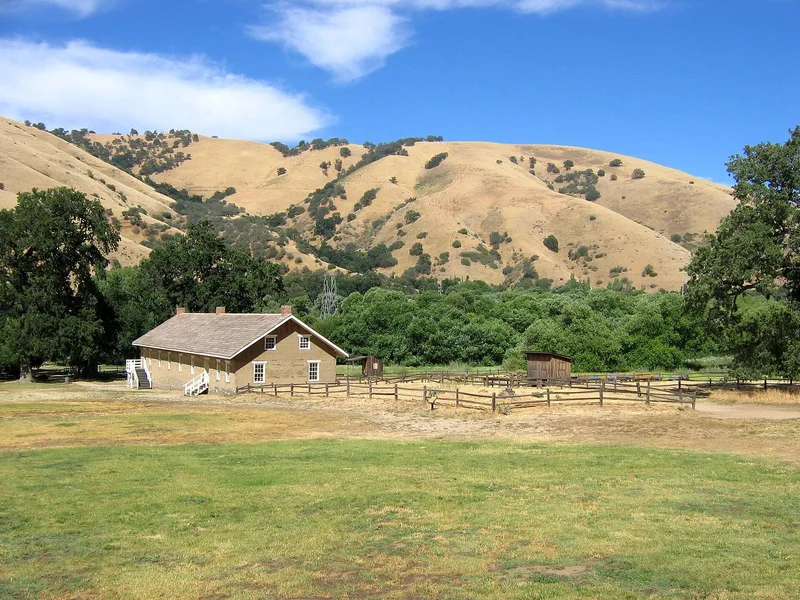
Fort Tejon is a former U.S. Army post in Grapevine Canyon, near Lebec in Kern County, California, on the sloping, oak-shaded ground along old Highway 99. The Army established it on June 24, 1854, to suppress stock rustling and protect Indians in the San Joaquin Valley. As regimental headquarters of the First Dragoons, it became an important military, social and political center. Camels were introduced here for transportation in 1858, and the fort was abandoned on September 11, 1864. It later served as headquarters for the Tejon Ranch until the State acquired it in 1940. Of the twenty or more original adobe and wood-frame buildings, most are ruins. Two barracks and an officers' quarters have been restored, and an orderlies' quarters has been stabilized. The remaining buildings and ruins surround a parade ground of roughly 400 by 400 feet. A park office and orientation center was built in 1958, and a nearby oak commemorates the pioneer Peter Lebec.
Machine-generated summary. This summary was generated by a language model from the official nomination document and has not been reviewed line by line by an editor. It may contain errors. Check the source document before relying on any detail. Source: nomination document (PDF) · catalog entry. Generated October 2026 (model claude-sonnet-5-5, prompt v1.0-2026-10-29).
| Period of significance | June 24, 1854 to September 11, 1864 |
|---|---|
| Areas of significance | Military, Transportation, Politics/Government, Architecture |
| Acreage | 205.4 |
| Boundary source | NPS cultural-resource GIS polygon |
| Full listing page | Fort Tejon (property record) |
What listing means for this property
This is a historic district. Buildings within its boundary are either contributing (they add to the district's significance) or non-contributing. Owners of contributing income-producing buildings can claim the 20% federal rehabilitation tax credit; homeowners should look at state credits. National Register districts impose no design review by themselves; a local historic district ordinance, if one exists, does (the difference explained).
General information, not legal or tax advice. Rules change; confirm with your State Historic Preservation Office or a qualified adviser.