Fort Miley Military Reservation

Why it's listed
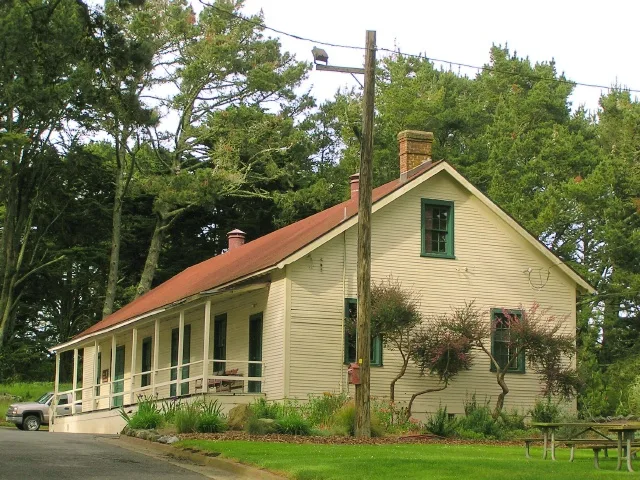
Fort Miley occupies Point Lobos, one of the outer headlands at the south side of the Golden Gate. The Army acquired the 54-acre reservation from the City and County of San Francisco in 1893 and began building gun and mortar batteries in 1899. Battery Chester, in the western section, held three 12-inch guns, while Batteries Livingston and Springer, in the east, were a sixteen-mortar battery later divided in two. Later additions included a 1913 searchlight power plant, fire control stations and a 6-inch gun battery completed in 1944. Most weapons were removed by 1943, though some guns lasted until about 1950. The wooden garrison buildings were demolished by 1934 and a Veterans Administration hospital now covers that central area, so the district is split into East and West Fort Miley. A 1902 ordnance storehouse survives as the last post building. The works are considered nationally significant for their role in defending San Francisco Bay.
Machine-generated summary. This summary was generated by a language model from the official nomination document and has not been reviewed line by line by an editor. It may contain errors. Check the source document before relying on any detail. Source: nomination document (PDF) · catalog entry. Generated October 2026 (model claude-sonnet-5-5, prompt v1.0-2026-10-29).
| Period of significance | 1892-1950 |
|---|---|
| Areas of significance | Military |
| Acreage | 27.5 |
| Boundary source | NPS cultural-resource GIS polygon |
| Full listing page | Fort Miley Military Reservation (property record) |
What listing means for this property
This is a historic district. Buildings within its boundary are either contributing (they add to the district's significance) or non-contributing. Owners of contributing income-producing buildings can claim the 20% federal rehabilitation tax credit; homeowners should look at state credits. National Register districts impose no design review by themselves; a local historic district ordinance, if one exists, does (the difference explained).
General information, not legal or tax advice. Rules change; confirm with your State Historic Preservation Office or a qualified adviser.