Folger Estate Stable Historic District

The National Park Service has not published a boundary polygon for this district; the map shows the listed properties inside it and the district's reference point.
Why it's listed
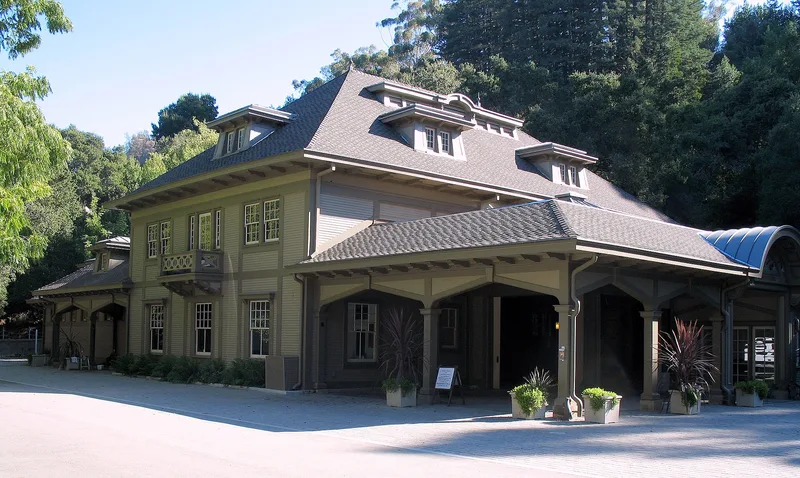
At the foot of the Santa Cruz Mountains in Woodside, a three-acre cluster of buildings sits just inside the entrance to Wunderlich Park. Its core is a large two-story wood stable, a garage and a blacksmith barn, all designed by Schultze & Brown and built in 1905-1906 for James A. Folger II and his wife Clara. The buildings have high hip roofs, dormers and ventilating towers, in a style drawn mainly from French Baroque architecture and partly from the Arts and Crafts movement. The district also keeps a stone dairy house and stone walls from an earlier ranch owned by Simon Jones and his son Everett. Several later buildings and pens are not counted as historic. The district is considered significant for its link to recreational horse keeping in Woodside. The Folger stable was the first built for wealthy San Franciscans who kept horses for pleasure, and many similar stables followed. The Folger house itself lies outside the district boundary.
Machine-generated summary. This summary was generated by a language model from the official nomination document and has not been reviewed line by line by an editor. It may contain errors. Check the source document before relying on any detail. Source: nomination document (PDF) · catalog entry. Generated October 2026 (model claude-sonnet-5-5, prompt v1.0-2026-10-29).
| Period of significance | 1905-1940 |
|---|---|
| Styles | French Renaissance; Bungalow/Craftsman |
| Areas of significance | Architecture, Entertainment/Recreation |
| Acreage | 3 |
| Boundary source | not published |
| Full listing page | Folger Estate Stable Historic District (property record) |
What listing means for this property
This is a historic district. Buildings within its boundary are either contributing (they add to the district's significance) or non-contributing. Owners of contributing income-producing buildings can claim the 20% federal rehabilitation tax credit; homeowners should look at state credits. National Register districts impose no design review by themselves; a local historic district ordinance, if one exists, does (the difference explained).
General information, not legal or tax advice. Rules change; confirm with your State Historic Preservation Office or a qualified adviser.