Faulkner, George Washington, House

Why it's listed
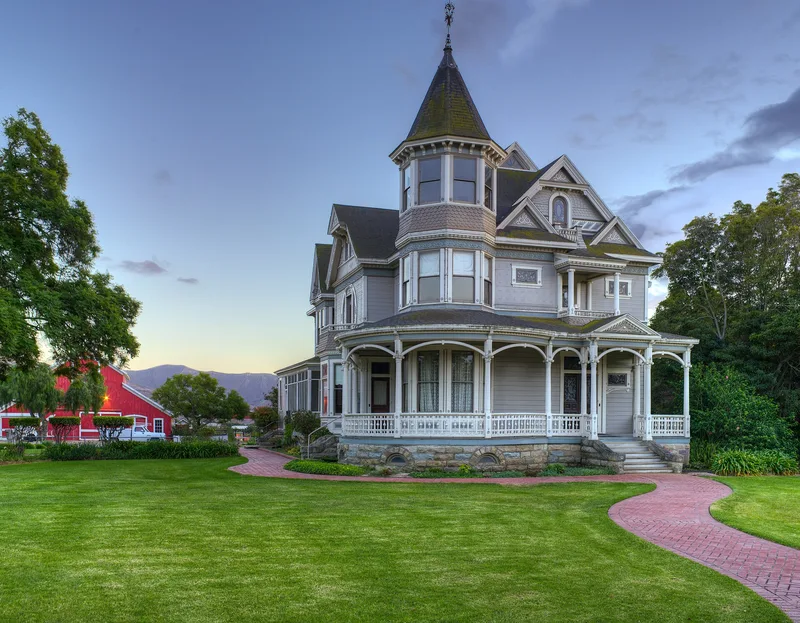
Set on 27 acres between Santa Paula and Ventura, this farm centers on a large Queen Anne house completed in 1894 for pioneer farmer George Washington Faulkner. Local architect/builders Franklin P. Ward and Herman Anlauf designed it with a three-story octagonal tower, a wraparound porch, stained and leaded glass, and decorative wood and pressed tin details. The interior retains carved fireplaces, embossed wall coverings and several kinds of wood. A board-and-batten barn from 1886, an outhouse and a cistern also contribute to the property, while a newer barn and a playhouse do not. Faulkner was among the first in the Santa Clara Valley to raise apricots and soft-shelled walnuts, helped invent a walnut-processing machine, and took part in cooperative marketing and local business organizations. The property was recognized for its architecture and for his role in the growth of Ventura County agriculture between 1886 and 1935. Few changes have been made to the house since about 1925.
Machine-generated summary. This summary was generated by a language model from the official nomination document and has not been reviewed line by line by an editor. It may contain errors. Check the source document before relying on any detail. Source: nomination document (PDF) · catalog entry. Generated October 2026 (model claude-sonnet-5-5, prompt v1.0-2026-10-29).
| Period of significance | 1886-1935 |
|---|---|
| Styles | Queen Anne |
| Areas of significance | Agriculture, Architecture |
| Acreage | 27.2 |
| Boundary source | NPS cultural-resource GIS polygon |
| Full listing page | Faulkner, George Washington, House (property record) |
What listing means for this property
This is a historic district. Buildings within its boundary are either contributing (they add to the district's significance) or non-contributing. Owners of contributing income-producing buildings can claim the 20% federal rehabilitation tax credit; homeowners should look at state credits. National Register districts impose no design review by themselves; a local historic district ordinance, if one exists, does (the difference explained).
General information, not legal or tax advice. Rules change; confirm with your State Historic Preservation Office or a qualified adviser.