Elmshaven

Why it's listed
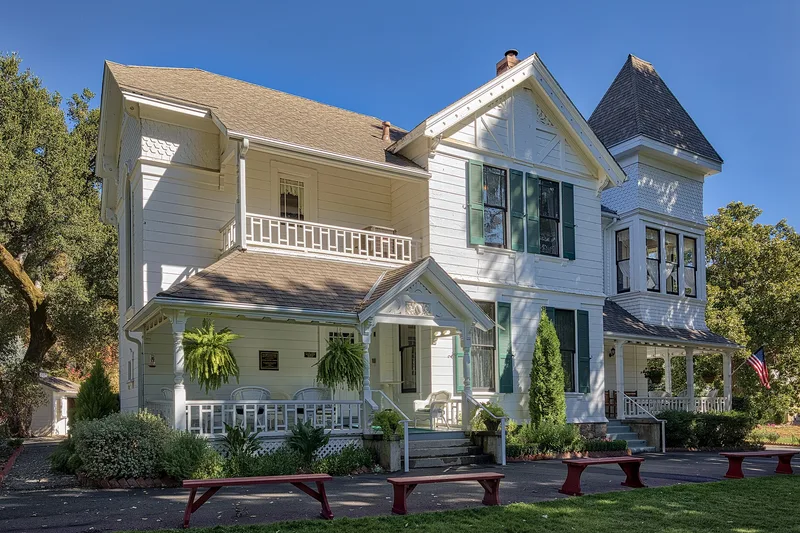
Elmshaven is a three-acre farmstead in the upper Napa Valley, just outside St. Helena, California. Its main building is a two-story redwood farmhouse built in 1885 by Robert Pratt on a stone foundation, with a veranda, stained and etched glass, and later bay windows and a corner tower added in 1902. A four-story tank house and a 1902 office with a library and concrete manuscript vault stand nearby. The property matters because Ellen Gould White, a co-founder of the Seventh-day Adventist Church, lived here from 1900 until her death in 1915. From this home she wrote extensively, promoted Adventist sanitariums and schools, and supported a reorganization of the church's administration. The nomination holds that it best represents her life, since her earlier homes in Battle Creek, Michigan, and Healdsburg, California, were altered or tied to her for a shorter time. The estate once covered 74 acres.
Machine-generated summary. This summary was generated by a language model from the official nomination document and has not been reviewed line by line by an editor. It may contain errors. Check the source document before relying on any detail. Source: nomination document (PDF) · catalog entry. Generated October 2026 (model claude-sonnet-5-5, prompt v1.0-2026-10-29).
| Period of significance | 1900-1915 |
|---|---|
| Styles | Late Victorian: Stick/Eastlake |
| Areas of significance | Religion, Health/Medicine, Social History |
| Acreage | 3 |
| Boundary source | NPS cultural-resource GIS polygon |
| Full listing page | Elmshaven (property record) |
What listing means for this property
This is a historic district. Buildings within its boundary are either contributing (they add to the district's significance) or non-contributing. Owners of contributing income-producing buildings can claim the 20% federal rehabilitation tax credit; homeowners should look at state credits. National Register districts impose no design review by themselves; a local historic district ordinance, if one exists, does (the difference explained).
General information, not legal or tax advice. Rules change; confirm with your State Historic Preservation Office or a qualified adviser.