Desert Queen Mine

Why it's listed
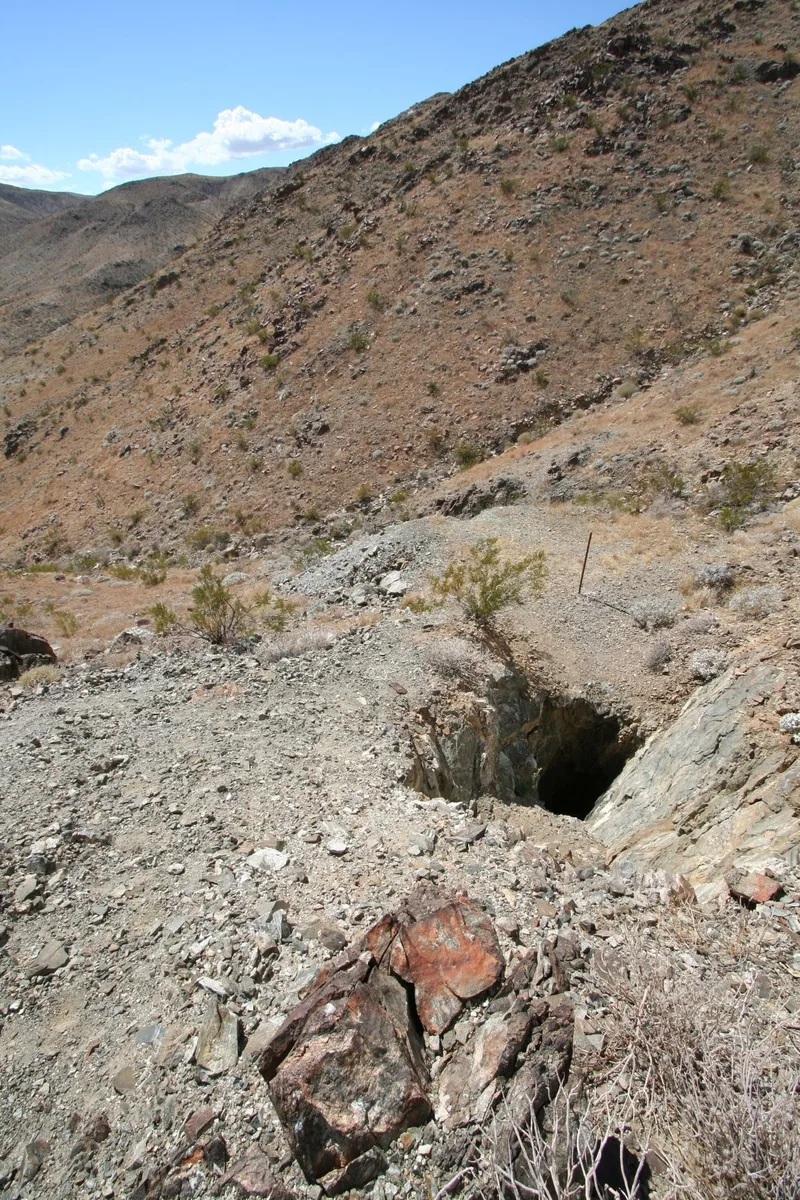
Desert Queen Mine is an abandoned gold mine of roughly 80 acres in Joshua Tree National Monument, south of Twentynine Palms. Its remains include four large vertical shafts, five inclined shafts, ten adits, and a main tailings pile 65 feet high. Scattered across the site are pipe, cyanide tanks, tramway track, concrete pads, an air pump marked Chicago Pneumatic, and the ruins of a stone house on the opposite hillside. The mine was listed as a locally significant example of desert mining. A. James discovered the gold in the early 1890s and was killed after being forced to sign the mine over to cattle rustler Jim McHaney. McHaney borrowed against expected ore, and the mine passed to a bank. William F. Keys possibly acquired it in 1917 and worked it intermittently until 1961. Operation was sporadic, yet occasional rich pockets of ore sustained interest for decades, making it more productive and longer-lived than most neighboring mines.
Machine-generated summary. This summary was generated by a language model from the official nomination document and has not been reviewed line by line by an editor. It may contain errors. Check the source document before relying on any detail. Source: nomination document (PDF) · catalog entry. Generated October 2026 (model claude-sonnet-5-5, prompt v1.0-2026-10-29).
| Period of significance | 1894 - 1961 |
|---|---|
| Areas of significance | Industry |
| Acreage | 80 |
| Boundary source | NPS cultural-resource GIS polygon |
| Full listing page | Desert Queen Mine (property record) |
What listing means for this property
This is a historic district. Buildings within its boundary are either contributing (they add to the district's significance) or non-contributing. Owners of contributing income-producing buildings can claim the 20% federal rehabilitation tax credit; homeowners should look at state credits. National Register districts impose no design review by themselves; a local historic district ordinance, if one exists, does (the difference explained).
General information, not legal or tax advice. Rules change; confirm with your State Historic Preservation Office or a qualified adviser.