Cow Camp

Why it's listed
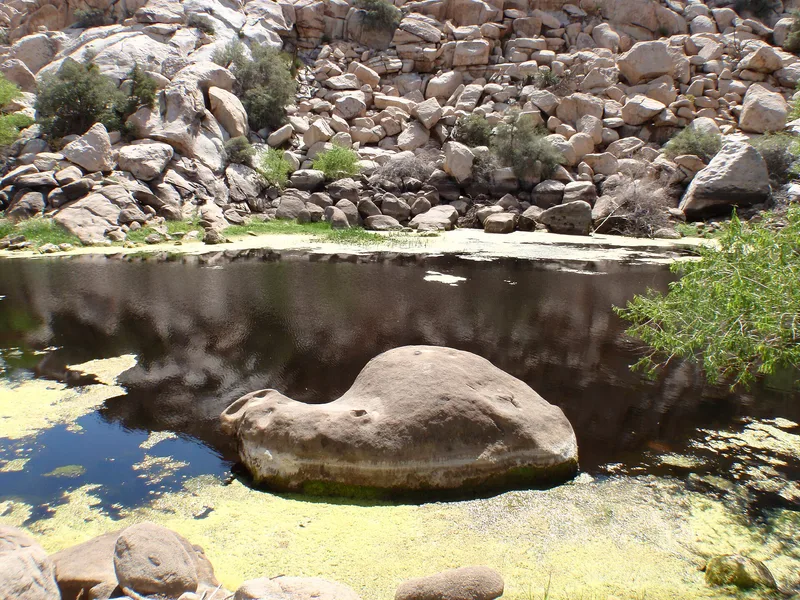
Cow Camp is a small historic site in a boulder-strewn valley of Joshua Tree National Monument, southwest of Twentynine Palms, California. Its importance began with a spring-fed natural pond in otherwise arid high desert. In the late 1880s and early 1890s the McHaney Gang, led by brothers William and James McHaney, used the camp to hold stolen cattle and change their brands with a running iron. Prospectors who camped nearby in 1893 found their horses missing and traced them to the camp, where an armed man pressured them to say nothing had been lost. Outlaw use apparently ended after 1894. In the 1920s William F. Keys used the camp as a line camp for legitimate stock raising and built a concrete dam, 22 feet high and 800 feet long, to increase the water supply. Today the ruins of one building, an old rock-lined well and the intact dam remain on the 80-acre property.
Machine-generated summary. This summary was generated by a language model from the official nomination document and has not been reviewed line by line by an editor. It may contain errors. Check the source document before relying on any detail. Source: nomination document (PDF) · catalog entry. Generated October 2026 (model claude-sonnet-5-5, prompt v1.0-2026-10-29).
| Period of significance | 1880s-1920s |
|---|---|
| Areas of significance | Agriculture |
| Acreage | 80 |
| Boundary source | NPS cultural-resource GIS polygon |
| Full listing page | Cow Camp (property record) |
What listing means for this property
This is a historic district. Buildings within its boundary are either contributing (they add to the district's significance) or non-contributing. Owners of contributing income-producing buildings can claim the 20% federal rehabilitation tax credit; homeowners should look at state credits. National Register districts impose no design review by themselves; a local historic district ordinance, if one exists, does (the difference explained).
General information, not legal or tax advice. Rules change; confirm with your State Historic Preservation Office or a qualified adviser.