Brea City Hall and Park

The National Park Service has not published a boundary polygon for this district; the map shows the listed properties inside it and the district's reference point.
Why it's listed
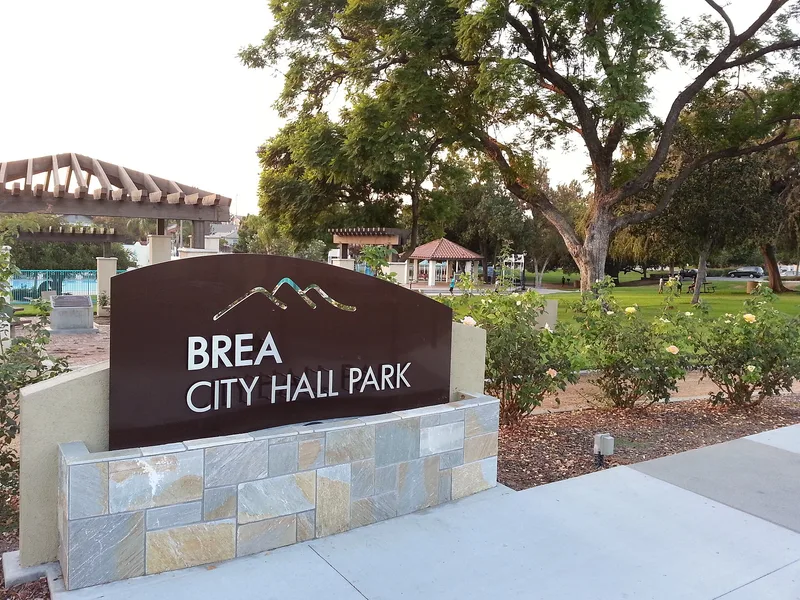
Brea's old City Hall sits in a 4.47-acre city park on South Brea Boulevard, once the main street of the town's original downtown. Completed in 1928-29 and designed by Los Angeles architect Allen Ruoff, the two-story stuccoed concrete block building blends Art Deco and Spanish Colonial Revival details. Ruoff also designed the adjoining swimming plunge, bathhouse and park as one plan. A 1931 American Legion Hall in Spanish Revival style completes the historic group. Brea was an oil town, and voters approved a $60,000 bond in 1927 to pay for the park, pool and hall. The City Hall was the first in Orange County to house every municipal function, including the library, jail, fire department and council chambers, in one building. The park served as the social center of early Brea, hosting band concerts and community barbecues. Later additions, a playground, courts and a gazebo are considered non-contributing.
Machine-generated summary. This summary was generated by a language model from the official nomination document and has not been reviewed line by line by an editor. It may contain errors. Check the source document before relying on any detail. Source: nomination document (PDF) · catalog entry. Generated October 2026 (model claude-sonnet-5-5, prompt v1.0-2026-10-29).
| Period of significance | 1922-1929 |
|---|---|
| Styles | Art Deco and Spanish Colonial Revival |
| Areas of significance | Community Planning and Development, Politics/Government, Architecture |
| Acreage | 4.5 |
| Boundary source | not published |
| Full listing page | Brea City Hall and Park (property record) |
What listing means for this property
This is a historic district. Buildings within its boundary are either contributing (they add to the district's significance) or non-contributing. Owners of contributing income-producing buildings can claim the 20% federal rehabilitation tax credit; homeowners should look at state credits. National Register districts impose no design review by themselves; a local historic district ordinance, if one exists, does (the difference explained).
General information, not legal or tax advice. Rules change; confirm with your State Historic Preservation Office or a qualified adviser.