Atchison Village Defense Housing Project, Cal. 4171-x

Why it's listed
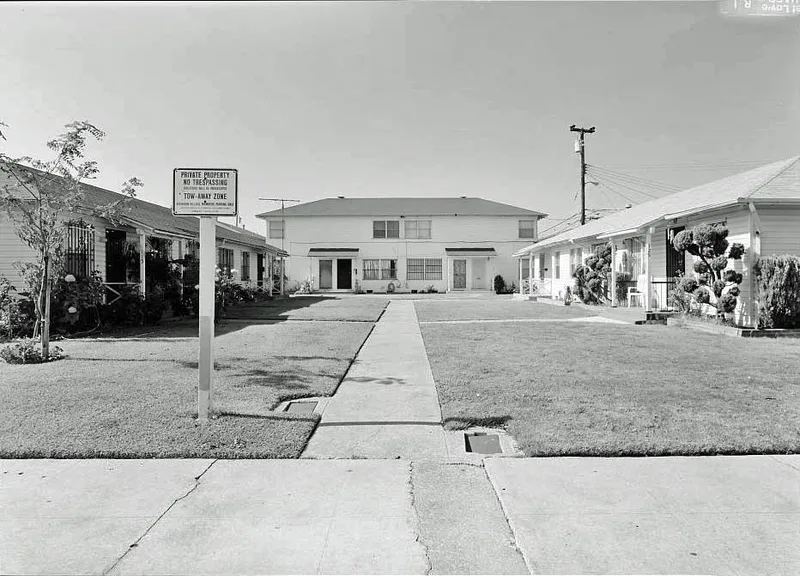
Atchison Village is a World War II defense housing project covering about 30 flat acres in central Richmond, California, between an industrial area, a railroad yard and low income housing. Work began under a federal order in October 1941, close to the Kaiser shipyards. The community holds 162 buildings of five designs with 450 dwelling units, plus a one-and-one-half-story Community Building and a triangular four-acre park once called the playing field. Designed to federal housing guidelines, the vernacular buildings have concrete foundations, light wood frames and, originally, redwood siding, now largely covered in vinyl. Structures cover only 15.4 percent of the land, leaving ample green space. It was listed as a cohesive and intact example of a Home Front defense housing project. Many similar projects were demolished or altered after the war. Residents formed a Mutual Homes Corporation that bought the village from the government, and its strict covenants have preserved the site's historic appearance.
Machine-generated summary. This summary was generated by a language model from the official nomination document and has not been reviewed line by line by an editor. It may contain errors. Check the source document before relying on any detail. Source: nomination document (PDF) · catalog entry. Generated October 2026 (model claude-sonnet-5-5, prompt v1.0-2026-10-29).
| Styles | Mid-Twentieth Century Vernacular |
|---|---|
| Areas of significance | Politics/Government |
| Acreage | 30.2 |
| Boundary source | NPS cultural-resource GIS polygon |
| Full listing page | Atchison Village Defense Housing Project, Cal. 4171-x (property record) |
What listing means for this property
This is a historic district. Buildings within its boundary are either contributing (they add to the district's significance) or non-contributing. Owners of contributing income-producing buildings can claim the 20% federal rehabilitation tax credit; homeowners should look at state credits. National Register districts impose no design review by themselves; a local historic district ordinance, if one exists, does (the difference explained).
General information, not legal or tax advice. Rules change; confirm with your State Historic Preservation Office or a qualified adviser.