Andreasen, F. W.-John Rossen House

The National Park Service has not published a boundary polygon for this district; the map shows the listed properties inside it and the district's reference point.
Why it's listed
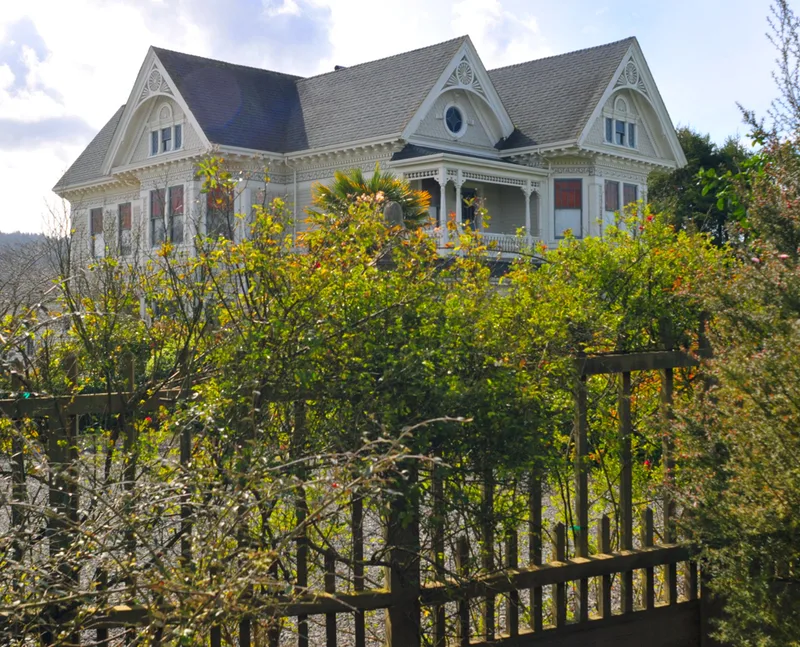
Set on low delta bottomland at Port Kenyon, once a river shipping point near Ferndale, this 20-acre farmstead includes a two-and-a-half-story Queen Anne house and a turn-of-the-century barn. Architect-builder W. S. Fitzell and local carpenters built the redwood house in 1901 for Danish-born dairyman Frands Wilhelm Andreasen. The house has six gables, cutaway bays, stained glass, patterned shingles and decorative porches, and its floor plan is unchanged. The barn, finished before construction of the house began, once held about twenty cows and is now used for lambing. John Rossen bought the property in 1912; he was a founding director of the Valley Flower Cooperative Creamery across the Salt River. The farm is significant for its connection to the dairy industry that shaped the Eel River Delta, and for its well-preserved late Queen Anne design, which is the only example of its kind in the Port Kenyon area. Restoration of the interior is under way.
Machine-generated summary. This summary was generated by a language model from the official nomination document and has not been reviewed line by line by an editor. It may contain errors. Check the source document before relying on any detail. Source: nomination document (PDF) · catalog entry. Generated October 2026 (model claude-sonnet-5-5, prompt v1.0-2026-10-29).
| Period of significance | 1901-1935 |
|---|---|
| Styles | Queen Anne |
| Areas of significance | Agriculture, Architecture |
| Acreage | 20 |
| Boundary source | not published |
| Full listing page | Andreasen, F. W.-John Rossen House (property record) |
What listing means for this property
This is a historic district. Buildings within its boundary are either contributing (they add to the district's significance) or non-contributing. Owners of contributing income-producing buildings can claim the 20% federal rehabilitation tax credit; homeowners should look at state credits. National Register districts impose no design review by themselves; a local historic district ordinance, if one exists, does (the difference explained).
General information, not legal or tax advice. Rules change; confirm with your State Historic Preservation Office or a qualified adviser.