Burbank, Luther, House and Garden

Why it's listed
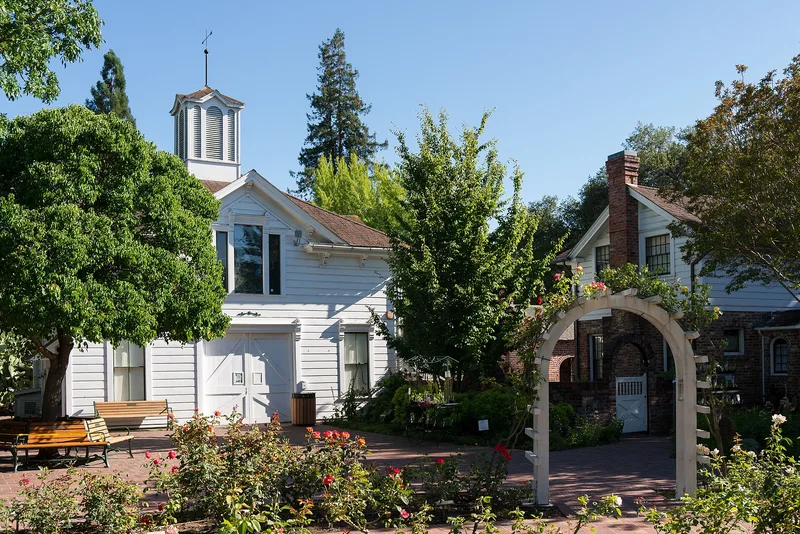
Luther Burbank's home and garden occupy three acres on Santa Rosa Avenue in Santa Rosa, California. The property includes the experimental garden he worked from 1883 to 1926, his home occupied from 1883 to 1906, the original greenhouse and a stable. Two acres with the gardens are operated by the city as a park. The house is unaltered, in excellent condition and still holds its original furnishings. The site is also marked as California Registered State Historical Landmark No. 234. The property matters because of Burbank's work in plant breeding. Known as "The Plant Wizard," he developed perhaps 800 new strains and varieties of plants at his Santa Rosa garden and at Sebastopol. He introduced over 250 fruit varieties, and his plums were perhaps his greatest contribution, with many still grown. He also worked with lilies, roses, dahlias, gladioli and poppies. Later criticism lowered some estimates of his value, but he made significant contributions to agriculture. The garden now preserves many of his plant varieties as an outdoor museum.
Significance in brief: The site is tied to Luther Burbank's work in plant breeding, where he developed perhaps 800 new strains and varieties of plants. He introduced over 250 fruit varieties, with his plums considered his greatest contribution. The form acknowledges later criticism of his reputation but concludes he made significant contributions to agriculture.
Machine-generated summary. This summary was generated by a language model from the official nomination document and has not been reviewed line by line by an editor. It may contain errors. Check the source document before relying on any detail. Source: nomination document (PDF) · National Archives catalog entry. NRHP reference 66000241, listed October 15, 1966. Summary generated October 2026 (model claude-sonnet-5-5, prompt v1.0-2026-10-29, confidence medium).
Key facts
| Address | 200 Santa Rosa Ave., Santa Rosa |
|---|---|
| County | Sonoma County |
| Listed | October 15, 1966 |
| Reference number | 66000241 |
| Resource type | Building |
| Period of significance | 1883-1926 |
| Areas of significance | Agriculture |
| Level of significance | National |
| National Historic Landmark | Yes, designated June 19, 1964 |
| Status (as stated in the nomination) | Home described as unaltered and in excellent condition, with original furnishings. Two acres with the gardens are operated as a city park; the home is a residence. The garden now serves as an outdoor educational-historic museum. |
| Acreage | 0.5 |
| Coordinates | 38.43587, -122.71165 (NPS GIS) |
What listing means for this property
National Register listing is honorary for a privately owned home: it does not by itself restrict what an owner may do with their own money, and it does not require public access. Restrictions come from local landmark or historic-district ordinances, which are separate (how they differ).
Owner-occupied houses are not eligible for the 20% federal rehabilitation tax credit, which applies to income-producing buildings, but many states offer credits for homeowners. Listing also opens the door to preservation easements and to buying a plaque. Start with what listing means for homeowners, renovating a listed house and selling one.
General information, not legal or tax advice. Rules change; confirm with your State Historic Preservation Office or a qualified adviser.
Sources and further reading
- National Park Service, National Register of Historic Places database (snapshot May 2026), reference 66000241.
- Nomination form (PDF, National Archives) — catalog entry
- Wikipedia article (used for cross-checking only; text not reproduced here)
- Wikidata Q6705512
- This listing as JSON
Last updated October 2026. Found an error? See the editorial policy for how to report it.