Jack, Robert, House
Also known as: Jack House

Why it's listed
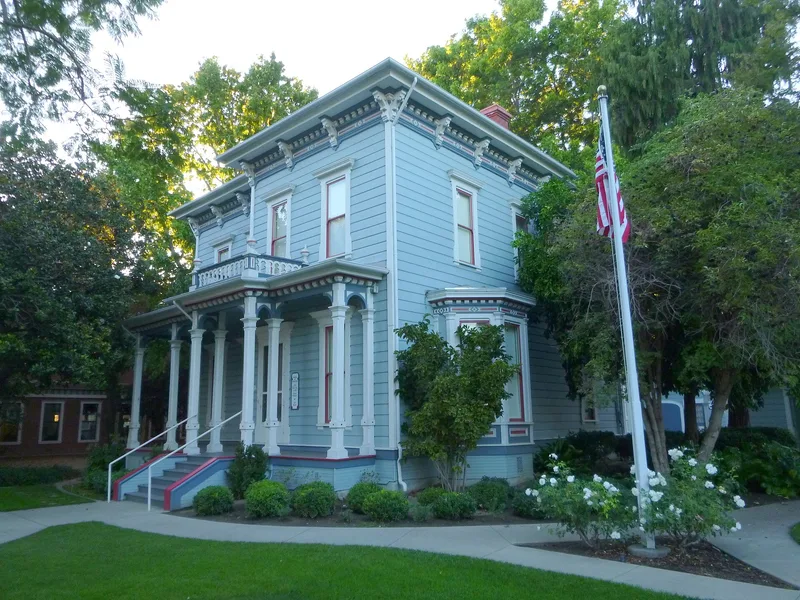
Built in 1882 at 536 Marsh Street in San Luis Obispo, this two-story wood frame Italianate house was the home of Robert Edgar Jack, a banker, land developer and wool grower. It has a low-pitched roof with a balustrade, wide eaves with decorative brackets, tall narrow windows, two single-story bays and a shallow front porch. Inside, eight major rooms open off a central hall, and the plaster ceiling work, marble mantel and stairs are original. The grounds hold a wash house and carriage house, along with a gazebo and utility building added in 1980. Jack lived here until his death in 1916, and his family occupied the house until 1974, when it was deeded to the city and became a museum. Jack helped organize local efforts to bring the railroad through the central coast, held several banking and hotel interests, and was Chairman of the City Trustees from 1890 to 1893. The property is recognized for his role in the area's commercial growth.
Significance in brief: The nomination argues significance under Criterion B in commerce and development for its association with Robert Jack, who lived there from 1882 until his death in 1916. Jack was a banker, land speculator and wool grower who helped organize efforts to bring the railroad through San Luis Obispo and the central coast. The form notes the house is likely also significant for its Italianate architecture but says this is not supported in the nomination.
Machine-generated summary. This summary was generated by a language model from the official nomination document and has not been reviewed line by line by an editor. It may contain errors. Check the source document before relying on any detail. Source: nomination document (PDF) · National Archives catalog entry. NRHP reference 92000312, listed April 13, 1992. Summary generated October 2026 (model claude-sonnet-5-5, prompt v1.0-2026-10-29, confidence high).
Key facts
| Address | 536 Marsh St., San Luis Obispo |
|---|---|
| County | San Luis Obispo County |
| Listed | April 13, 1992 |
| Reference number | 92000312 |
| Resource type | Building |
| Period of significance | 1882-1894 |
| Architect / builder | Evans, William |
| Architectural style | Late Victorian: Italianate |
| Criteria |
|
| Areas of significance | Community Planning and Development, Commerce |
| Level of significance | Local |
| Status (as stated in the nomination) | Deeded to the city in 1974 by Jack family heirs and now used as a museum; the interior is little changed and the original furnishings and library were included in the gift. |
| Acreage | 0.8 |
| Coordinates | 35.27730, -120.66574 (NPS GIS) |
What listing means for this property
National Register listing is honorary for a privately owned home: it does not by itself restrict what an owner may do with their own money, and it does not require public access. Restrictions come from local landmark or historic-district ordinances, which are separate (how they differ).
Owner-occupied houses are not eligible for the 20% federal rehabilitation tax credit, which applies to income-producing buildings, but many states offer credits for homeowners. Listing also opens the door to preservation easements and to buying a plaque. Start with what listing means for homeowners, renovating a listed house and selling one.
General information, not legal or tax advice. Rules change; confirm with your State Historic Preservation Office or a qualified adviser.
Sources and further reading
- National Park Service, National Register of Historic Places database (snapshot May 2026), reference 92000312.
- Nomination form (PDF, National Archives) — catalog entry
- Wikipedia article (used for cross-checking only; text not reproduced here)
- Wikidata Q14683821
- This listing as JSON
Last updated October 2026. Found an error? See the editorial policy for how to report it.