Whaleyville Historic District
Also known as: VDHR File No. 133-694

Why it's listed
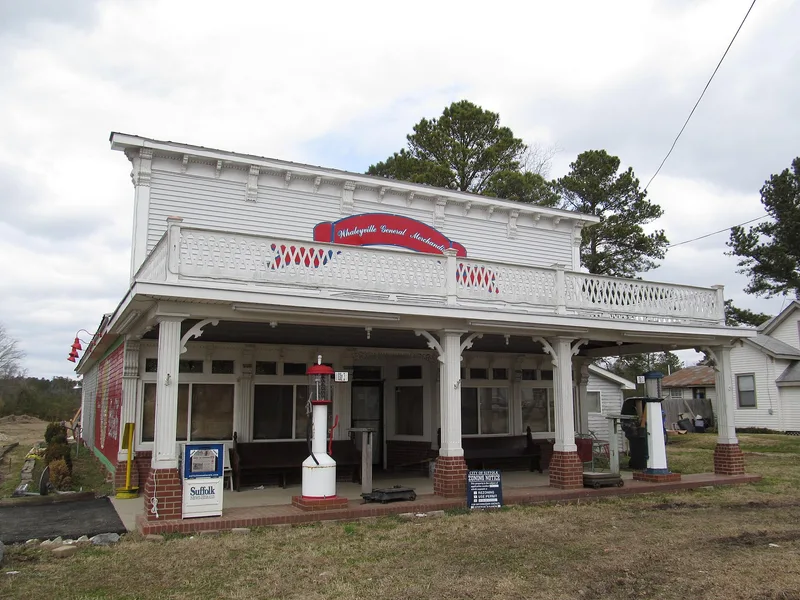
Whaleyville is a small village about twelve miles south of downtown Suffolk, Virginia, where U.S. Route 13 meets State Route 616. It grew around the timber industry in the late nineteenth century and was large enough to incorporate as a town around 1900. The historic district contains 127 buildings, of which 103 contribute to its character. Most are wood-frame vernacular houses built between about 1880 and 1940, including I-houses, small cottages, American Foursquares and bungalows, with consistent setbacks, spacing and mature trees. Other buildings include Gothic Revival churches, Odd Fellows and Masonic lodges, and brick commercial buildings such as the Bank of Whaleyville and the Whaleyville Store. Many modest frame structures come from the African-American community. The district was listed for its architecture, with a period of significance from 1874 to 1944. Later buildings, mainly one-story brick or frame structures from about 1950 to 1980, are noncontributing.
Significance in brief: The district is significant under Criterion C for architecture. It preserves a cohesive timber and railroad-era village with simple vernacular houses, churches, lodges and commercial buildings. It also includes many small frame vernacular structures from the African-American community.
Machine-generated summary. This summary was generated by a language model from the official nomination document and has not been reviewed line by line by an editor. It may contain errors. Check the source document before relying on any detail. Source: nomination document (PDF) · National Archives catalog entry. NRHP reference 95000392, listed April 7, 1995. Summary generated October 2026 (model claude-sonnet-5-5, prompt v1.0-2026-10-29, confidence medium).
Key facts
| Address | Jct. of US 13 and VA 616, Suffolk (Independent City) |
|---|---|
| County | Suffolk |
| Listed | April 7, 1995 |
| Reference number | 95000392 |
| Resource type | District |
| Period of significance | 1874-1944 |
| Architectural style | Late Victorian: Queen Anne; Bungalow/Craftsman; Other: I-house, side-passage single-pile plan; mostly vernacular |
| Criteria |
|
| Areas of significance | Architecture |
| Level of significance | Local |
| Status (as stated in the nomination) | Churches are described as still in use, and the McAlister Masonic Lodge is presently used as a post office. Current functions include dwellings, religion, commerce and agriculture processing. |
| Acreage | 39.5 |
| Coordinates | 36.59018, -76.68334 (NPS GIS) |
What listing means for this property
This is a historic district. Buildings within its boundary are either contributing (they add to the district's significance) or non-contributing. Owners of contributing income-producing buildings can claim the 20% federal rehabilitation tax credit; homeowners should look at state credits. National Register districts impose no design review by themselves; a local historic district ordinance, if one exists, does (the difference explained).
General information, not legal or tax advice. Rules change; confirm with your State Historic Preservation Office or a qualified adviser.
Sources and further reading
- National Park Service, National Register of Historic Places database (snapshot May 2026), reference 95000392.
- Nomination form (PDF, National Archives) — catalog entry
- Wikipedia article (used for cross-checking only; text not reproduced here)
- Wikidata Q16903190
- This listing as JSON
Last updated October 2026. Found an error? See the editorial policy for how to report it.