Mawavi Historic District, Chopawamsic RDA Camp 2
Also known as: Prince William Forest Park

Why it's listed
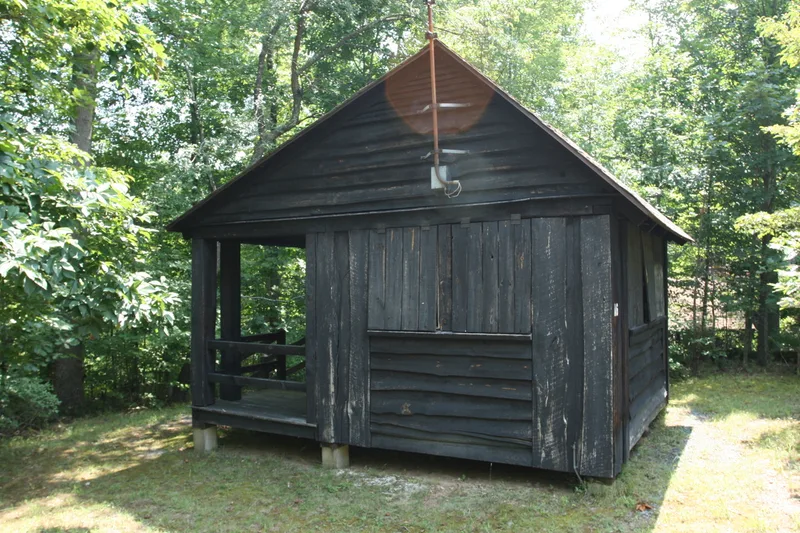
Camp 2, known as Mawavi, is a girls' organized camp within Prince William Forest Park, Virginia. Built between 1936 and 1938 by Civilian Conservation Corps enrollees and WPA laborers, it covers about 132 acres. The buildings are arranged like a wheel, with a dining hall, administration, infirmary and staff quarters at the hub and four unit camps around it. Each unit has a lodge, a latrine, leaders' cabins and small cabins. The buildings are raised on concrete piers and clad in locally cut pine or oak waney board, with a stone chimney or hearth on some. A concrete dam on the South Branch of Quantico Creek created the camp lake. Five Mawavi buildings were published as model facilities in national park design handbooks. The district was listed as an example of New Deal recreation planning and rustic architecture, with 58 contributing resources and three non-contributing ones.
Significance in brief: The district is presented as the culmination of a New Deal movement to build model resource-reclamation projects, and as an example of rustic architecture. Several of its buildings were published as model plans in national NPS design books. Its craftsmanship and careful fit between architecture and landscape have kept the original character of the camp.
Machine-generated summary. This summary was generated by a language model from the official nomination document and has not been reviewed line by line by an editor. It may contain errors. Check the source document before relying on any detail. Source: nomination document (PDF) · National Archives catalog entry. NRHP reference 89000457, listed June 12, 1989. Summary generated October 2026 (model claude-sonnet-5-5, prompt v1.0-2026-10-29, confidence medium).
Key facts
| Address | Off VA 619 W of I-95, Triangle |
|---|---|
| County | Prince William County |
| Listed | June 12, 1989 |
| Reference number | 89000457 |
| Resource type | District |
| Architect / builder | Built by CCC enrollees (Camp SP-25) and WPA laborers under NPS design direction; no individual architect named |
| Architectural style | NPS rustic architecture |
| Areas of significance | Conservation, Entertainment/Recreation, Architecture |
| Level of significance | State, Local |
| Status (as stated in the nomination) | Camp still used as a camp and for outdoor recreation; the original council rings were replaced and are non-contributing, and the washhouse has a modern skylight. |
| Acreage | 132 |
| Coordinates | 38.57984, -77.41487 (NPS GIS) |
What listing means for this property
This is a historic district. Buildings within its boundary are either contributing (they add to the district's significance) or non-contributing. Owners of contributing income-producing buildings can claim the 20% federal rehabilitation tax credit; homeowners should look at state credits. National Register districts impose no design review by themselves; a local historic district ordinance, if one exists, does (the difference explained).
General information, not legal or tax advice. Rules change; confirm with your State Historic Preservation Office or a qualified adviser.
Sources and further reading
- National Park Service, National Register of Historic Places database (snapshot May 2026), reference 89000457.
- Nomination form (PDF, National Archives) — catalog entry
- Wikipedia article (used for cross-checking only; text not reproduced here)
- Wikidata Q5104822
- This listing as JSON
Last updated October 2026. Found an error? See the editorial policy for how to report it.