Effingham
Also known as: 76-6

Why it's listed
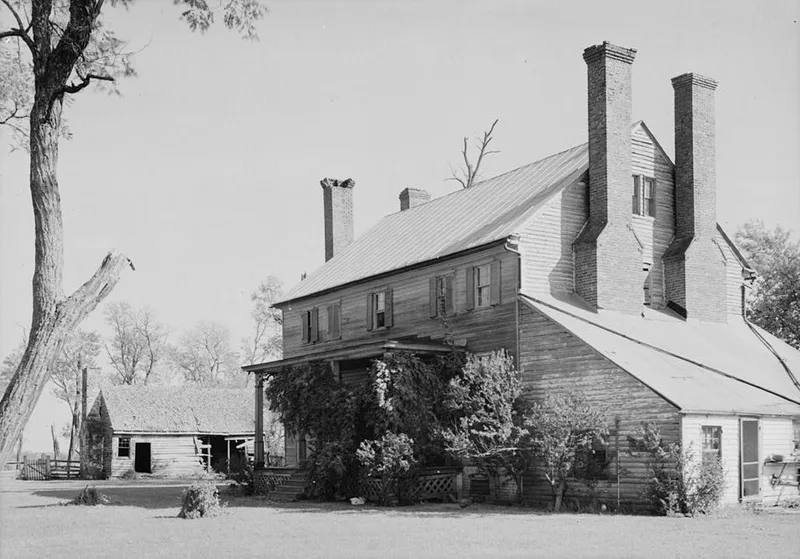
Effingham is a 687-acre cattle farm near Aden in southern Prince William County, with an eighteenth-century plantation house at its center. The two-story, five-bay frame dwelling stands on a raised Flemish bond brick basement. Brick double chimneys with pent closets mark each end, and the interior has a central hall with molded entablatures over the doors and enclosed staircases. William Alexander, a Prince William County Committee of Safety member, militia lieutenant colonel and county justice, built it after buying the land in 1777, though family tradition gives 1765. The property shares design features with the nearby Pilgrim's Rest. A brown sandstone blacksmith shop, smokehouse, well house and former slaves' quarters survive, along with a three-level terraced garden reputed to be among the earliest in Virginia. The district counts four contributing buildings and one contributing structure, plus four noncontributing buildings and a swimming pool. It was recognized for its architecture and its link to Alexander.
Significance in brief: The nomination argues that Effingham is one of the county's most significant surviving eighteenth-century plantation complexes. It cites the transplanted Tidewater architecture, the double pent brick chimneys, enclosed staircases and fine interior woodwork. It also cites the association with Colonel William Alexander and the surviving outbuildings and terraced garden.
Machine-generated summary. This summary was generated by a language model from the official nomination document and has not been reviewed line by line by an editor. It may contain errors. Check the source document before relying on any detail. Source: nomination document (PDF) · National Archives catalog entry. NRHP reference 89001793, listed November 9, 1989. Summary generated October 2026 (model claude-sonnet-5-5, prompt v1.0-2026-10-29, confidence medium).
Key facts
| Address | 14103 Aden Rd., Aden |
|---|---|
| County | Prince William County |
| Listed | November 9, 1989 |
| Reference number | 89001793 |
| Resource type | District |
| Period of significance | 1777-1814 |
| Architect / builder | William Alexander (builder); architect unknown |
| Architectural style | Colonial/Postmedieval English, Southern Colonial (Tidewater style) |
| Areas of significance | Politics/Government, Architecture |
| Level of significance | Local |
| Status (as stated in the nomination) | Still a single dwelling on a 687-acre cattle farm. The house was refurbished after 1955, and several outbuildings have been demolished. |
| Acreage | 330 |
| Coordinates | 38.63867, -77.52187 (NPS GIS) |
What listing means for this property
This is a historic district. Buildings within its boundary are either contributing (they add to the district's significance) or non-contributing. Owners of contributing income-producing buildings can claim the 20% federal rehabilitation tax credit; homeowners should look at state credits. National Register districts impose no design review by themselves; a local historic district ordinance, if one exists, does (the difference explained).
General information, not legal or tax advice. Rules change; confirm with your State Historic Preservation Office or a qualified adviser.
Sources and further reading
- National Park Service, National Register of Historic Places database (snapshot May 2026), reference 89001793.
- Nomination form (PDF, National Archives) — catalog entry
- Wikipedia article (used for cross-checking only; text not reproduced here)
- Wikidata Q15216153
- This listing as JSON
Last updated October 2026. Found an error? See the editorial policy for how to report it.