Moton, Robert Russa, High School
Also known as: Farmville Elementary School; VDHR File No. 144-53

Why it's listed
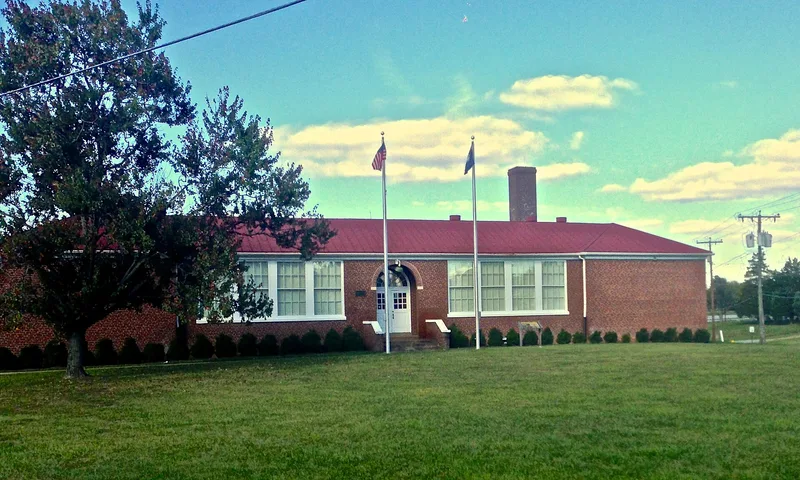
Robert Russa Moton High School is a one-story brick building in Farmville, Virginia, completed in 1939 as a high school for Black students in Prince Edward County. It has a symmetrical U-shaped plan, a low hipped metal roof, subtle classical detailing, eight classrooms, an office and a central auditorium. The exterior and interior remain largely unchanged, with original woodwork, blackboards and floors. The school was soon overcrowded and lacked facilities that the white high school had, including a gymnasium and a cafeteria. On April 23, 1951, students led by Barbara Johns struck to demand better conditions. With NAACP attorneys, their protest became a lawsuit that was combined with four others and argued before the Supreme Court as Brown v. Board of Education in 1954. The county then closed its public schools from 1959 to 1964 to avoid integration. The school is recognized for this role in the civil rights movement. The building is now vacant.
Significance in brief: The school was the site of a student strike on April 23, 1951, protesting overcrowded and inadequate facilities. The strike led to the Davis v. Prince Edward County School Board case, which was combined with four others and argued before the Supreme Court as Brown v. Board of Education. The county later closed its public schools from 1959 to 1964 rather than integrate them.
Machine-generated summary. This summary was generated by a language model from the official nomination document and has not been reviewed line by line by an editor. It may contain errors. Check the source document before relying on any detail. Source: nomination document (PDF) · National Archives catalog entry. NRHP reference 95001177, listed October 24, 1995. Summary generated October 2026 (model claude-sonnet-5-5, prompt v1.0-2026-10-29, confidence high).
Key facts
| Address | Jct. of S. Main St. and Griffin Blvd., Farmville |
|---|---|
| County | Prince Edward County |
| Listed | October 24, 1995 |
| Reference number | 95001177 |
| Resource type | Building |
| Period of significance | 1951-1964 |
| Architect / builder | Unknown |
| Architectural style | Late 19th and Early 20th Century Revivals: Classical Revival |
| Criteria |
|
| Areas of significance | Social History, Politics/Government |
| Level of significance | National |
| National Historic Landmark | Yes, designated August 5, 1998 |
| Status (as stated in the nomination) | Listed as currently vacant; the building is described as remarkably well preserved and little altered since 1939. |
| Acreage | 5 |
| Coordinates | 37.29130, -78.39759 (NPS GIS) |
What listing means for this property
For a publicly owned building or structure, listing mainly matters when federal funds, permits or licences are involved: projects then go through Section 106 review so effects on the property are considered. Listing also strengthens applications for preservation grants and, for leased income-producing uses, can enable the federal rehabilitation tax credit.
Noted as vacant in the nomination. Nomination documents can be decades old; current status may differ. If you are considering buying an empty listed property, read the due-diligence checklist.
General information, not legal or tax advice. Rules change; confirm with your State Historic Preservation Office or a qualified adviser.
Sources and further reading
- National Park Service, National Register of Historic Places database (snapshot May 2026), reference 95001177.
- Nomination form (PDF, National Archives) — catalog entry
- Wikipedia article (used for cross-checking only; text not reproduced here)
- Wikidata Q7349431
- This listing as JSON
Last updated October 2026. Found an error? See the editorial policy for how to report it.