Cleydael
Also known as: Quarter Neck

Why it's listed
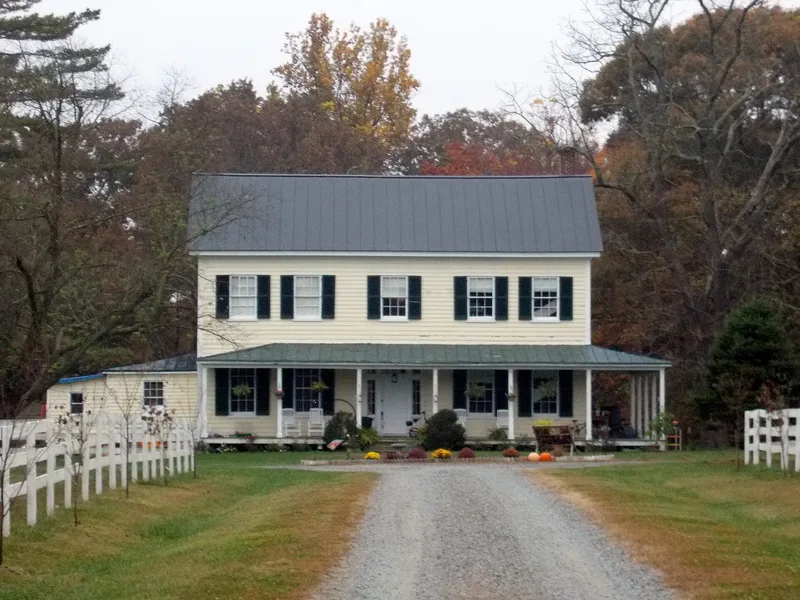
Cleydael is a two-story white frame house off Virginia Route 206 near Weedonville in King George County. Dr. Richard H. Stuart, the county's wealthiest resident, built it in 1859 as a summer residence on a 1,300-acre tract, about eight miles from his main home at Cedar Grove, to escape the malaria risk along the Potomac. The house is symmetrical, with five-bay north and south facades, and a T-shaped plan of intersecting halls designed to draw cool cross breezes. Most interior woodwork survives, and changes are limited to two bathrooms and a lean-to kitchen. The property is also tied to the Lincoln assassination. On April 23, 1865, John Wilkes Booth and David Herold came to the house, and Booth asked Stuart for medical help. Suspicious, Stuart fed the men and sent them away. The house is considered a fine example of mid-nineteenth century rural Virginia vernacular building and remains a private residence.
Significance in brief: The nomination argues the house is significant historically because John Wilkes Booth sought medical help from Dr. Stuart here on April 23, 1865, and was turned away after being given dinner. It is significant architecturally for its T-shaped plan of intersecting halls, which promoted cross ventilation in a summer home built away from the malarial Potomac River. It is also a fine example of mid-nineteenth century vernacular construction in rural Virginia.
Machine-generated summary. This summary was generated by a language model from the official nomination document and has not been reviewed line by line by an editor. It may contain errors. Check the source document before relying on any detail. Source: nomination document (PDF) · National Archives catalog entry. NRHP reference 86003495, listed December 18, 1986. Summary generated October 2026 (model claude-sonnet-5-5, prompt v1.0-2026-10-29, confidence medium).
Key facts
| Address | Off VA 206, Weedonville |
|---|---|
| County | King George County |
| Listed | December 18, 1986 |
| Reference number | 86003495 |
| Resource type | Building |
| Period of significance | Ca. 1859 |
| Architectural style | Mid-nineteenth century vernacular construction |
| Areas of significance | Politics/Government, Architecture |
| Level of significance | State |
| Status (as stated in the nomination) | Occupied private residence; the house has long been a rental property. The barn to the east is in extremely dilapidated condition and is non-contributing. |
| Acreage | 7.5 |
| Coordinates | 38.31311, -77.13364 (NPS GIS) |
What listing means for this property
National Register listing is honorary: it recognises significance and does not restrict what a private owner may do without federal money or permits. It unlocks the 20% federal rehabilitation tax credit for income-producing buildings, state credits in many states, and Section 106 review when federal agencies are involved. See what listing means in practice.
General information, not legal or tax advice. Rules change; confirm with your State Historic Preservation Office or a qualified adviser.
Sources and further reading
- National Park Service, National Register of Historic Places database (snapshot May 2026), reference 86003495.
- Nomination form (PDF, National Archives) — catalog entry
- Wikipedia article (used for cross-checking only; text not reproduced here)
- Wikidata Q14712183
- This listing as JSON
Last updated October 2026. Found an error? See the editorial policy for how to report it.