Church Quarter
Also known as: DHR No. 42-6

Why it's listed
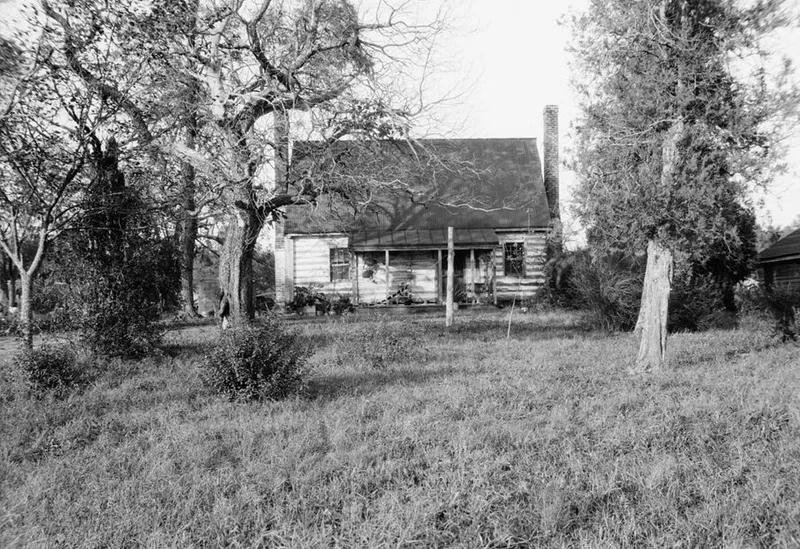
Church Quarter is a small log house on Old Ridge Road in western Hanover County, Virginia, built about 1843. It has one story, three bays, hewn V-notched logs, a wood-shingled gable roof and brick chimneys at each end. Inside, two heated rooms follow a hall-parlor plan, with an unfinished loft above, simple Greek Revival mantels and board-and-batten doors hung on reused eighteenth-century hinges. A frame rear ell was added about 1885. The three-acre setting also holds two frame outbuildings and the ruin of a brick orangery, a rare kind of domestic outbuilding used to shelter tender plants in winter. The tract takes its name from nearby Fork Church and was part of a 1719 land patent. Local tradition recalls General Stonewall Jackson stopping for a drink of water here in 1862. The property was recognized for its architecture, as the best-preserved antebellum log dwelling in the county and a rare, little-altered example of log construction.
Significance in brief: The nomination argues the house is the best-preserved antebellum log dwelling in Hanover County and a rare, relatively unaltered survivor of a once-common house type. Its reused eighteenth-century door hardware and the rare orangery ruin add to its architectural interest. A brief stop by Stonewall Jackson for water in 1862 added to its local importance.
Machine-generated summary. This summary was generated by a language model from the official nomination document and has not been reviewed line by line by an editor. It may contain errors. Check the source document before relying on any detail. Source: nomination document (PDF) · National Archives catalog entry. NRHP reference 00001436, listed November 22, 2000. Summary generated October 2026 (model claude-sonnet-5-5, prompt v1.0-2026-10-29, confidence high).
Key facts
| Address | 12432 Old Ridge Rd., Doswell |
|---|---|
| County | Hanover County |
| Listed | November 22, 2000 |
| Reference number | 00001436 |
| Resource type | Building |
| Period of significance | 1843-1950 |
| Architect / builder | Unknown |
| Architectural style | No Style |
| Criteria |
|
| Areas of significance | Architecture |
| Level of significance | Local |
| Status (as stated in the nomination) | Current function is listed as a social meeting hall; the log house is described as surviving relatively unaltered, and the orangery is a ruin. |
| Acreage | 3 |
| Coordinates | 37.84789, -77.52381 (NPS GIS) |
What listing means for this property
Religious properties are listed for their architectural or historical significance, not their religious use. Listing is honorary and does not restrict the congregation's use of the building. The federal rehabilitation credit is generally unavailable unless part of the building is income-producing; some state programmes and preservation grants do cover religious buildings. Federal funding or permits trigger Section 106 review.
General information, not legal or tax advice. Rules change; confirm with your State Historic Preservation Office or a qualified adviser.
Sources and further reading
- National Park Service, National Register of Historic Places database (snapshot May 2026), reference 00001436.
- Nomination form (PDF, National Archives) — catalog entry
- Wikipedia article (used for cross-checking only; text not reproduced here)
- Wikidata Q14712173
- This listing as JSON
Last updated October 2026. Found an error? See the editorial policy for how to report it.