Bolling Hall

Why it's listed
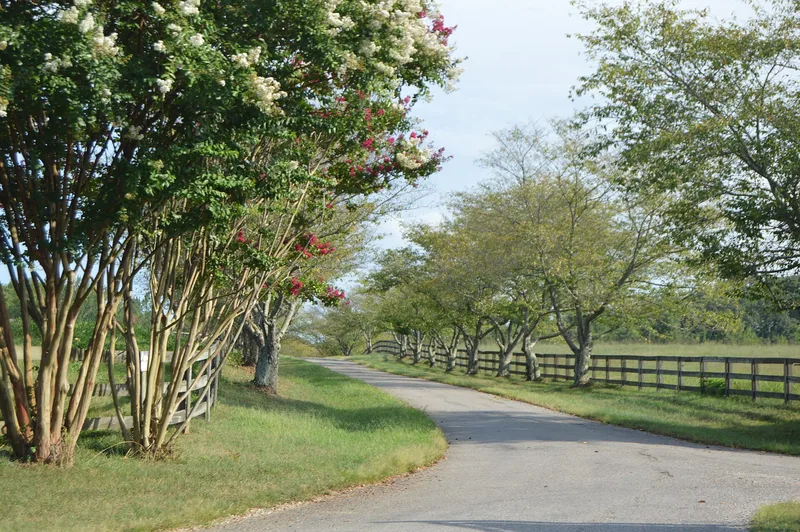
Bolling Hall is a long, clapboarded farm dwelling set in the rolling hills of Goochland County, Virginia, above the flat bottom lands of the upper James River. William Bolling built the oldest part in the third quarter of the eighteenth century as a two-story, side-hall house on land his family had held since 1714. Additions followed around 1803 and 1815, and a major remodeling between 1845 and 1861 added a stair tower and raised the east wing. A mid-twentieth-century renovation rescued the house from use as a barn. Early sash, beaded clapboards, Flemish bond foundation sections and eighteenth-century-style paneling survive. The property is notable for its link to deaf education: John Briarwood taught Bolling's deaf children here in the 1810s, which led to the first school for the deaf in the United States at the family's nearby Cobbs house. It also remains one of few colonial plantation houses of the upper James region with its rural setting intact.
Significance in brief: The nomination cites the house's early association with deaf education in the United States, since John Briarwood taught William Bolling's deaf children here before a school was set up at nearby Cobbs. It is also the earliest surviving house tied to the Bolling family, because Cobbs burned in 1829. It is further one of the few colonial plantation houses of the upper James region that keeps much of its original fabric and rural setting.
Machine-generated summary. This summary was generated by a language model from the official nomination document and has not been reviewed line by line by an editor. It may contain errors. Check the source document before relying on any detail. Source: nomination document (PDF) · National Archives catalog entry. NRHP reference 72001397, listed December 27, 1972. Summary generated October 2026 (model claude-sonnet-5-5, prompt v1.0-2026-10-29, confidence high).
Key facts
| Address | W of Goochland off VA 600, Goochland |
|---|---|
| County | Goochland County |
| Listed | December 27, 1972 |
| Reference number | 72001397 |
| Resource type | Building |
| Architect / builder | William Bolling (builder of the earliest portion) |
| Areas of significance | Education, Architecture, Social History |
| Level of significance | State |
| Status (as stated in the nomination) | Occupied private residence; altered over time, with a 1947 renovation after the house had been used as a barn. The early outbuildings have disappeared. |
| Acreage | 900 |
| Coordinates | 37.67795, -77.95612 (NPS GIS) |
What listing means for this property
National Register listing is honorary for a privately owned home: it does not by itself restrict what an owner may do with their own money, and it does not require public access. Restrictions come from local landmark or historic-district ordinances, which are separate (how they differ).
Owner-occupied houses are not eligible for the 20% federal rehabilitation tax credit, which applies to income-producing buildings, but many states offer credits for homeowners. Listing also opens the door to preservation easements and to buying a plaque. Start with what listing means for homeowners, renovating a listed house and selling one.
General information, not legal or tax advice. Rules change; confirm with your State Historic Preservation Office or a qualified adviser.
Sources and further reading
- National Park Service, National Register of Historic Places database (snapshot May 2026), reference 72001397.
- Nomination form (PDF, National Archives) — catalog entry
- Wikipedia article (used for cross-checking only; text not reproduced here)
- Wikidata Q14712050
- This listing as JSON
Last updated October 2026. Found an error? See the editorial policy for how to report it.