Monroe Law Office
Also known as: James Monroe Law Office

Why it's listed
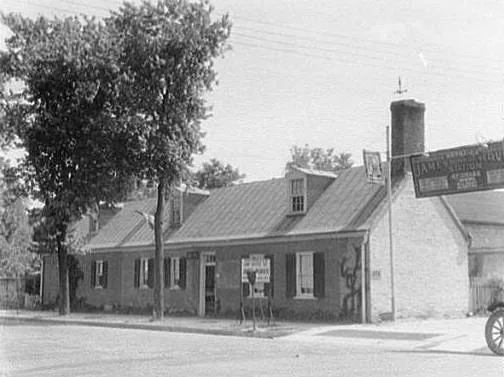
This brick law office at 908 Charles Street in Fredericksburg, Virginia, dates to 1758. It was originally a long, story-and-a-half building with green-shuttered windows, three chimneys and three dormers along a low gabled roof. James Monroe, later the fifth President of the United States, practiced law here from 1786 to 1789, after leaving the Congress of the Confederation and returning to the Virginia legislature. During those years he attended the Annapolis conference of 1786 and opposed the new Constitution at the Virginia ratifying convention of 1788. In 1948 an L-shaped addition was built to house Monroe furniture, memorabilia and a small library, and a new front door was added to manage visitors. The nomination notes that these changes left the building with little historic integrity. It is nonetheless recognized for its link to Monroe's career before his later service as governor, diplomat, cabinet member and President.
Significance in brief: James Monroe, fifth President of the United States, practiced law in this building from 1786 to 1789. The building was later restored, expanded and furnished with Monroe furniture from later in his life. The form concedes that the building has little historic integrity today.
Machine-generated summary. This summary was generated by a language model from the official nomination document and has not been reviewed line by line by an editor. It may contain errors. Check the source document before relying on any detail. Source: nomination document (PDF) · National Archives catalog entry. NRHP reference 66000917, listed November 13, 1966. Summary generated October 2026 (model claude-sonnet-5-5, prompt v1.0-2026-10-29, confidence medium).
Key facts
| Address | 908 Charles St., Fredericksburg (Independent City) |
|---|---|
| County | Fredericksburg |
| Listed | November 13, 1966 |
| Reference number | 66000917 |
| Resource type | Building |
| Period of significance | 1786-1789 |
| Areas of significance | Law, Politics/Government |
| Level of significance | National |
| National Historic Landmark | Yes, designated November 13, 1966 |
| Status (as stated in the nomination) | Listed in excellent condition and altered; in use as a museum and memorial library, open to the public. |
| Acreage | 0.9 |
| Coordinates | 38.30245, -77.46164 (NPS GIS) |
What listing means for this property
For an income-producing building, listing (individually or as a contributing building in a district) is the gateway to the 20% federal rehabilitation tax credit on qualified rehabilitation costs, often stackable with state credits. Work claiming the credit must follow the Secretary of the Interior's Standards and be approved in advance.
Listing does not restrict a private owner acting without federal money or permits; where federal funding or licensing is involved, Section 106 review applies.
General information, not legal or tax advice. Rules change; confirm with your State Historic Preservation Office or a qualified adviser.
Sources and further reading
- National Park Service, National Register of Historic Places database (snapshot May 2026), reference 66000917.
- Nomination form (PDF, National Archives) — catalog entry
- Wikipedia article (used for cross-checking only; text not reproduced here)
- Wikidata Q6139918
- This listing as JSON
Last updated October 2026. Found an error? See the editorial policy for how to report it.