Rivanna Farm
Also known as: Middle Place; Glen Mary

Why it's listed
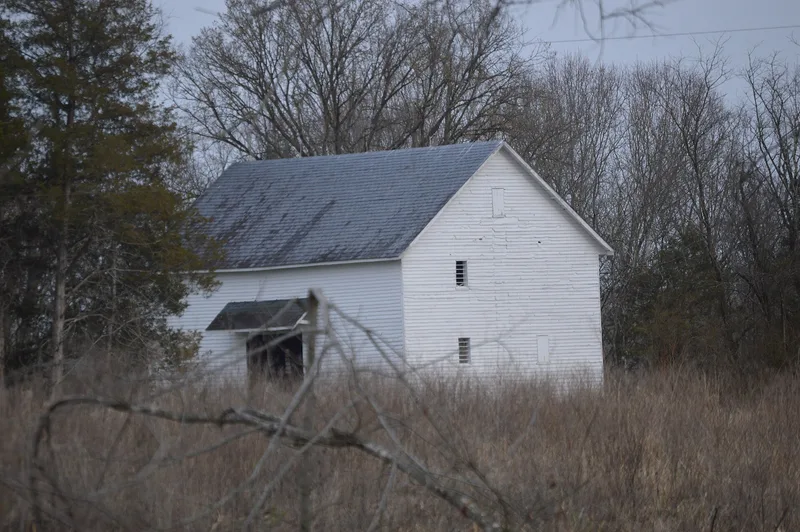
Rivanna Farm is a 255-acre farm on a hilltop above the James River and the railroad tracks near Bremo Bluff, Fluvanna County, Virginia. Its core is a two-story frame house finished in 1880 for Joseph Payne, built by local builder John B. Anderson with his teenage son D. Wiley Anderson, who later became a Richmond architect. The house shows Italianate influence, with a two-tiered porch, bay windows and a bracketed cornice. Around it stand nine contributing outbuildings, including a kitchen and quarter building, smokehouse, overseer's house, corncribs, stable, granary and a schoolhouse later used as a tenant house. Some date to James Galt's farming from 1839, and others to Payne's tenure. Surviving ledgers record crops, especially tobacco, and the use of new farming methods. The farm took its name from the railroad flag station moved there in 1884, which served passengers and freight from neighboring farms until the 1950s. These links to agriculture, transportation and architecture supported its listing.
Significance in brief: The farm is significant for agriculture because its surviving buildings and written ledgers document 19th- and 20th-century farming, including tobacco, corn, wheat and hay, and the adoption of improved farming methods. It is significant for transportation because of its link to the James River and Kanawha Canal and the railroad, including a flag station that gave the farm its name in 1884. It is significant for architecture because of its outbuilding collection and an Italianate-influenced house built by John B. Anderson and his son D. Wiley Anderson.
Machine-generated summary. This summary was generated by a language model from the official nomination document and has not been reviewed line by line by an editor. It may contain errors. Check the source document before relying on any detail. Source: nomination document (PDF) · National Archives catalog entry. NRHP reference 01000147, listed February 16, 2001. Summary generated October 2026 (model claude-sonnet-5-5, prompt v1.0-2026-10-29, confidence high).
Key facts
| Address | Rte. 1,, Bremo Bluff |
|---|---|
| County | Fluvanna County |
| Listed | February 16, 2001 |
| Reference number | 01000147 |
| Resource type | Building |
| Period of significance | 1839 - 1950 |
| Architect / builder | Anderson, John B. and Anderson, D. Wiley |
| Architectural style | Late Victorian - Italianate |
| Criteria |
|
| Areas of significance | Agriculture, Architecture, Transportation |
| Level of significance | Local |
| Status (as stated in the nomination) | Still in use as a single dwelling with agricultural outbuildings; the farm buildings are described as largely intact with minimal alteration since the historic period. |
| Acreage | 255 |
| Coordinates | 37.73853, -78.20964 (NPS GIS) |
What listing means for this property
National Register listing is honorary for a privately owned home: it does not by itself restrict what an owner may do with their own money, and it does not require public access. Restrictions come from local landmark or historic-district ordinances, which are separate (how they differ).
Owner-occupied houses are not eligible for the 20% federal rehabilitation tax credit, which applies to income-producing buildings, but many states offer credits for homeowners. Listing also opens the door to preservation easements and to buying a plaque. Start with what listing means for homeowners, renovating a listed house and selling one.
General information, not legal or tax advice. Rules change; confirm with your State Historic Preservation Office or a qualified adviser.
Sources and further reading
- National Park Service, National Register of Historic Places database (snapshot May 2026), reference 01000147.
- Nomination form (PDF, National Archives) — catalog entry
- Wikipedia article (used for cross-checking only; text not reproduced here)
- Wikidata Q7336989
- This listing as JSON
Last updated October 2026. Found an error? See the editorial policy for how to report it.