Calverton Historic District
Also known as: VDHR File No. 030-5165
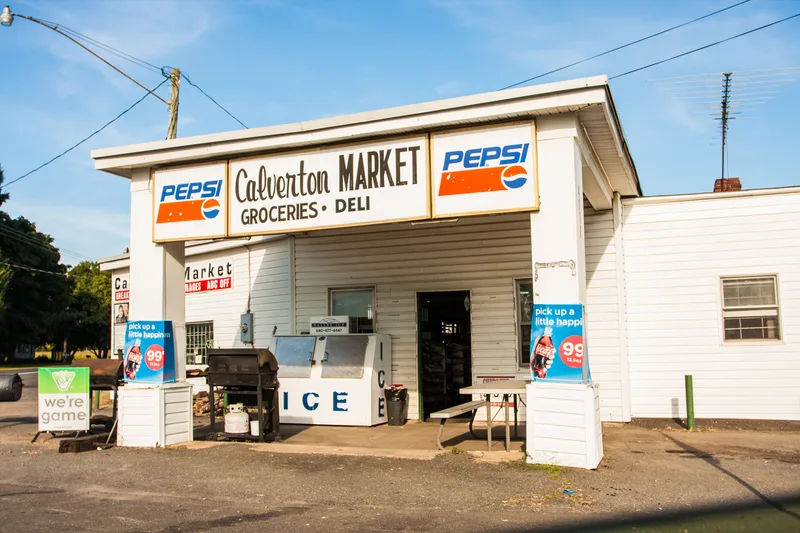

Why it's listed
Calverton is a small railroad village in southeastern Fauquier County, Virginia, where bristersburg Road crosses the old Orange and Alexandria Railroad. The railroad arrived in 1852, and the community grew as a center of stores, homes and a post office serving nearby farms. Civil War fighting along the line and a 1944 fire destroyed most early buildings, so the surviving district mainly reflects the village of the early to mid-20th century. Its 51 acres hold dwellings, commercial buildings, a church, a former school and a large dairy farm. Maple Hill, built about 1880, is an uncommon local example of the Stick Style. The Landis House was enlarged in 1892 in the Italianate manner, and Wesleyan United Methodist Church dates to 1898. Most other houses are vernacular forms such as the I-house, hall-parlor and gable-end types. The district is valued as an identifiable railroad and farming community with an intact streetscape.
Significance in brief: Calverton grew up around the railroad after 1852 as a commercial and social center for local farm families. Most mid-19th-century buildings were lost to Civil War activity and a 1944 fire, but the later buildings keep the village's early-to-mid 20th-century character and streetscape. The district shows a range of vernacular forms and styles tied to its railroad and dairy-farming history.
Machine-generated summary. This summary was generated by a language model from the official nomination document and has not been reviewed line by line by an editor. It may contain errors. Check the source document before relying on any detail. Source: nomination document (PDF) · National Archives catalog entry. NRHP reference 10000542, listed August 12, 2010. Summary generated October 2026 (model claude-sonnet-5-5, prompt v1.0-2026-10-29, confidence medium).
Key facts
| Address | Area including parts of Bristersburg and Catlett Rds, Calverton |
|---|---|
| County | Fauquier County |
| Listed | August 12, 2010 |
| Reference number | 10000542 |
| Resource type | District |
| Architect / builder | Frederick Curtis (head carpenter, Wesleyan United Methodist Church); Rhodes family (Maple Hill) |
| Architectural style | Late Victorian (Italianate, Queen Anne); Colonial Revival; Bungalow/Craftsman; Vernacular |
| Areas of significance | Architecture, Commerce |
| Level of significance | Local |
| Status (as stated in the nomination) | Current functions include single dwellings, outbuildings, a general store and a church. The former post office on the Maple Hill property is described as abandoned, and the former school has been converted to apartments. |
| Acreage | 51 |
| Coordinates | 38.63475, -77.66965 (NPS GIS) |
What listing means for this property
This is a historic district. Buildings within its boundary are either contributing (they add to the district's significance) or non-contributing. Owners of contributing income-producing buildings can claim the 20% federal rehabilitation tax credit; homeowners should look at state credits. National Register districts impose no design review by themselves; a local historic district ordinance, if one exists, does (the difference explained).
General information, not legal or tax advice. Rules change; confirm with your State Historic Preservation Office or a qualified adviser.
Sources and further reading
- National Park Service, National Register of Historic Places database (snapshot May 2026), reference 10000542.
- Nomination form (PDF, National Archives) — catalog entry
- Wikipedia article (used for cross-checking only; text not reproduced here)
- Wikidata Q14712122
- This listing as JSON
Last updated October 2026. Found an error? See the editorial policy for how to report it.