Rig Theater

Why it's listed
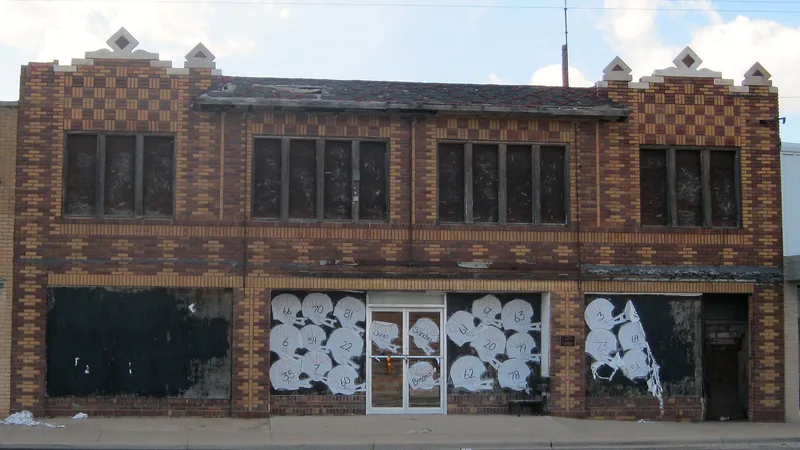
Built in 1928 during the west Texas oil boom, this two-story brick building on Hendricks Boulevard in Wink housed an 850-seat theater, ground-floor shops and upstairs offices. Griffith Amusement Company of Oklahoma City built it, and the name refers to the oil rigs common in the region; the marquee once carried a miniature rig. The front wall uses polychromatic brick in diamonds, checkerboards and zigzags, topped by a parapet with two masonry crowns. It was the first permanent masonry structure among Wink's hastily built wooden commercial buildings. The theater showed films, staged live acts and ran prize drawings that led to a 1936 lawsuit. Roy Orbison attended and performed there, and graffiti he and friends left in 1951 was later preserved. Converted to a variety store in the late 1950s, the building is now empty and its interior is deteriorated, though the brick facade and parapet remain largely intact.
Significance in brief: It is a good local example of a Commercial Style movie theater with distinctive geometric brickwork and a crowned parapet, and the most elaborate commercial building in Wink. It was also an important local entertainment venue, and a place where Roy Orbison attended shows and performed as a young musician.
Machine-generated summary. This summary was generated by a language model from the official nomination document and has not been reviewed line by line by an editor. It may contain errors. Check the source document before relying on any detail. Source: nomination document (PDF) · National Archives catalog entry. NRHP reference 03000770, listed August 14, 2003. Summary generated October 2026 (model claude-sonnet-5-5, prompt v1.0-2026-10-29, confidence high).
Key facts
| Address | 213-215 E. Hendricks Blvd., Wink |
|---|---|
| County | Winkler County |
| Listed | August 14, 2003 |
| Reference number | 03000770 |
| Resource type | Building |
| Period of significance | 1928-1953 |
| Architect / builder | Griffith Amusement Co. |
| Architectural style | Late 19th and Early 20th Century American Movements: Commercial Style |
| Criteria |
|
| Areas of significance | Entertainment/Recreation, Architecture |
| Level of significance | Local |
| Status (as stated in the nomination) | Currently unoccupied and deteriorated; a rehabilitation is planned to restore the marquee and exterior features and to house the Roy Orbison Museum. |
| Acreage | 0.9 |
| Coordinates | 31.75577, -103.14645 (NPS GIS) |
What listing means for this property
For an income-producing building, listing (individually or as a contributing building in a district) is the gateway to the 20% federal rehabilitation tax credit on qualified rehabilitation costs, often stackable with state credits. Work claiming the credit must follow the Secretary of the Interior's Standards and be approved in advance.
Listing does not restrict a private owner acting without federal money or permits; where federal funding or licensing is involved, Section 106 review applies.
Noted as vacant in the nomination. Nomination documents can be decades old; current status may differ. If you are considering buying an empty listed property, read the due-diligence checklist.
General information, not legal or tax advice. Rules change; confirm with your State Historic Preservation Office or a qualified adviser.
Sources and further reading
- National Park Service, National Register of Historic Places database (snapshot May 2026), reference 03000770.
- Nomination form (PDF, National Archives) — catalog entry
- Wikidata Q42304457
- This listing as JSON
Last updated October 2026. Found an error? See the editorial policy for how to report it.