Plaza Theatre

Why it's listed
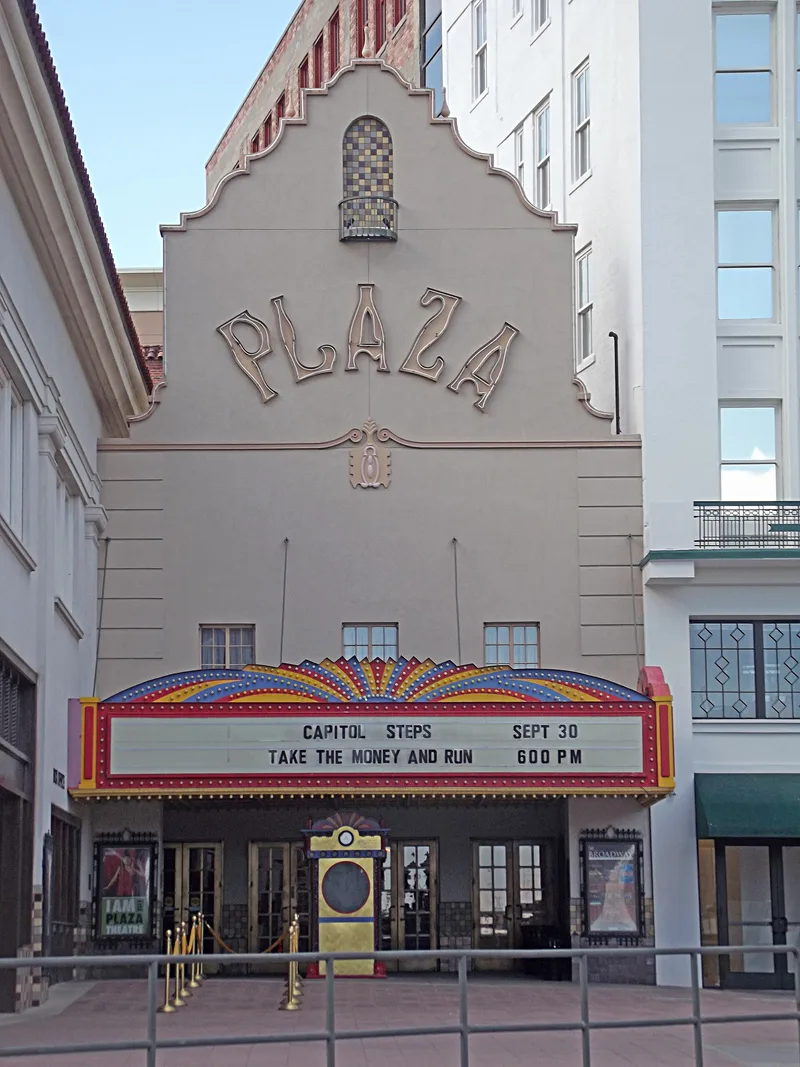
Plaza Theatre, at 125 Pioneer Plaza in downtown El Paso, opened on September 12, 1930, to a capacity crowd. Architect W. Scott Dunne fitted the steel-framed, brick-faced building into an irregular block, with a four-story auditorium and a modest entrance wing facing Pioneer Plaza. The exterior uses restrained Spanish Colonial Revival detail, while the interior is elaborate: mosaic tile floors, molded plaster, painted ceilings, and metal railings. The auditorium seats 2,410 and was designed to suggest an outdoor garden, with terraced side walls, foliage, a cloud machine, a bird machine and a ceiling of twinkling lights. It was billed as the largest theater of its kind between New Orleans and Los Angeles. It hosted films and live acts, and a Wurlitzer organ was installed, later removed. The entrance has been altered and its Mission-style parapet removed, but the interior decoration remains intact. The theater was nominated as an architectural and entertainment landmark and as one of few surviving examples of its kind.
Significance in brief: The nomination argues the theater is a notable example of Spanish Colonial Revival architecture, with a lavish interior and advanced stage, sound and mechanical equipment. It was the "Showplace of the Southwest" and a major regional cultural center until the 1960s. It is one of few remaining theaters of its kind and the only one in El Paso with this level of architectural extravagance.
Machine-generated summary. This summary was generated by a language model from the official nomination document and has not been reviewed line by line by an editor. It may contain errors. Check the source document before relying on any detail. Source: nomination document (PDF) · National Archives catalog entry. NRHP reference 87000902, listed June 4, 1987. Summary generated October 2026 (model claude-sonnet-5-5, prompt v1.0-2026-10-29, confidence medium).
Key facts
| Address | 125 Pioneer Plaza, El Paso |
|---|---|
| County | El Paso County |
| Listed | June 4, 1987 |
| Reference number | 87000902 |
| Resource type | Building |
| Period of significance | 1900- (specific dates 1929-30) |
| Architect / builder | W. Scott Dunne, Architect; C. A. Goetting, Contractor |
| Architectural style | Spanish Colonial Revival |
| Areas of significance | Entertainment/Recreation, Architecture |
| Level of significance | National |
| Status (as stated in the nomination) | Operating as a movie theater in sound structural condition with interior intact; entrance facade altered, parapet removed, and the Wurlitzer organ and many furnishings removed. |
| Acreage | 1 |
| Coordinates | 31.75899, -106.48958 (NPS GIS) |
What listing means for this property
For an income-producing building, listing (individually or as a contributing building in a district) is the gateway to the 20% federal rehabilitation tax credit on qualified rehabilitation costs, often stackable with state credits. Work claiming the credit must follow the Secretary of the Interior's Standards and be approved in advance.
Listing does not restrict a private owner acting without federal money or permits; where federal funding or licensing is involved, Section 106 review applies.
General information, not legal or tax advice. Rules change; confirm with your State Historic Preservation Office or a qualified adviser.
Sources and further reading
- National Park Service, National Register of Historic Places database (snapshot May 2026), reference 87000902.
- Nomination form (PDF, National Archives) — catalog entry
- Wikipedia article (used for cross-checking only; text not reproduced here)
- Wikidata Q573955
- This listing as JSON
Last updated October 2026. Found an error? See the editorial policy for how to report it.