Fort Bliss Main Post Historic District

Why it's listed
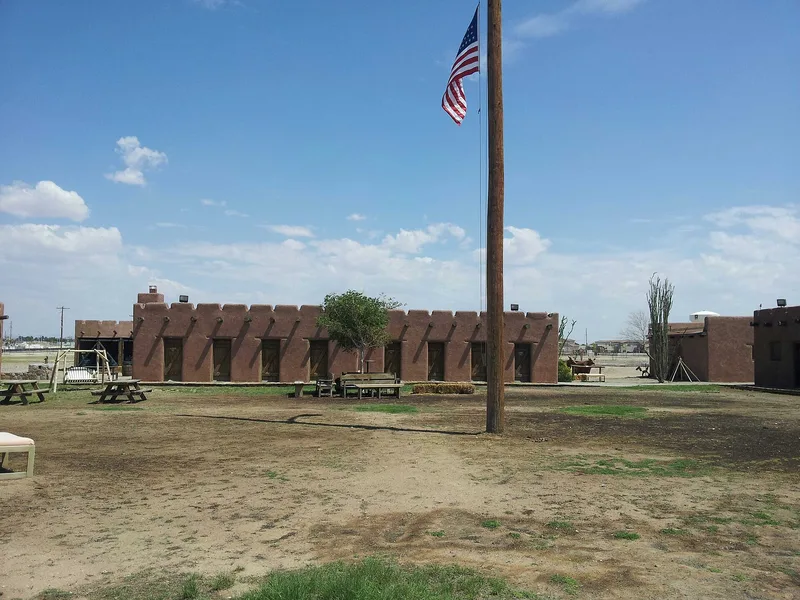
Fort Bliss Main Post Historic District occupies a mesa in El Paso, Texas, about three miles north of the Rio Grande, with the Franklin Mountains to the west. It contains 346 contributing resources, including 343 buildings, a site and two structures, built by the U.S. Army from 1891 to the late 1940s. The earliest group, from the 1890s, includes brick hospital buildings, barracks, a guardhouse, and rows of officers' quarters. Officers' housing lines the west side of the parade ground, while barracks and support buildings line the east. Styles range from Queen Anne and Greek Revival to Colonial Revival and Mission-influenced designs, many based on Quartermaster General standard plans. The post grew from a small infantry outpost into a major cavalry station and later an air defense training and missile testing center. It was recognized for its military history, its architecture, and the planning and landscape design of the main post. Later buildings that were temporary or altered, or built after the period of significance, are counted as non-contributing.
Significance in brief: The district is significant for its role in U.S. Army military history, including establishing a permanent Army presence on the U.S.-Mexican border. It also represents the Army's standardized architecture and its landscape and community planning. The form groups the contributing resources into seven construction periods from 1891 to 1950.
Machine-generated summary. This summary was generated by a language model from the official nomination document and has not been reviewed line by line by an editor. It may contain errors. Check the source document before relying on any detail. Source: nomination document (PDF) · National Archives catalog entry. NRHP reference 98000427, listed May 7, 1998. Summary generated October 2026 (model claude-sonnet-5-5, prompt v1.0-2026-10-29, confidence medium).
Key facts
| Address | Fort Bliss, El Paso |
|---|---|
| County | El Paso County |
| Listed | May 7, 1998 |
| Reference number | 98000427 |
| Resource type | District |
| Period of significance | 1891-1948 |
| Architect / builder | U.S. Army |
| Architectural style | Late Victorian/Queen Anne; Colonial Revival, Mission/Spanish Colonial Revival, Pueblo, Italian Renaissance; Bungalow/Craftsman, Prairie School; no style |
| Criteria |
|
| Areas of significance | Architecture, Military, Industry, Community Planning and Development |
| Level of significance | National |
| Status (as stated in the nomination) | Current functions listed in the form are still military facility, industrial storage, institutional housing and plaza; some buildings have been adapted to new uses, and one hospital isolation ward is listed as inactive. |
| Acreage | 339 |
| Coordinates | 31.81089, -106.43549 (NPS GIS) |
What listing means for this property
This is a historic district. Buildings within its boundary are either contributing (they add to the district's significance) or non-contributing. Owners of contributing income-producing buildings can claim the 20% federal rehabilitation tax credit; homeowners should look at state credits. National Register districts impose no design review by themselves; a local historic district ordinance, if one exists, does (the difference explained).
General information, not legal or tax advice. Rules change; confirm with your State Historic Preservation Office or a qualified adviser.
Sources and further reading
- National Park Service, National Register of Historic Places database (snapshot May 2026), reference 98000427.
- Nomination form (PDF, National Archives) — catalog entry
- Wikipedia article (used for cross-checking only; text not reproduced here)
- Wikidata Q65121339
- This listing as JSON
Last updated October 2026. Found an error? See the editorial policy for how to report it.