Castolon Historic District
Also known as: La Harmonica Ranch,Camp Santa Helena; Castolon Army Compound

Why it's listed
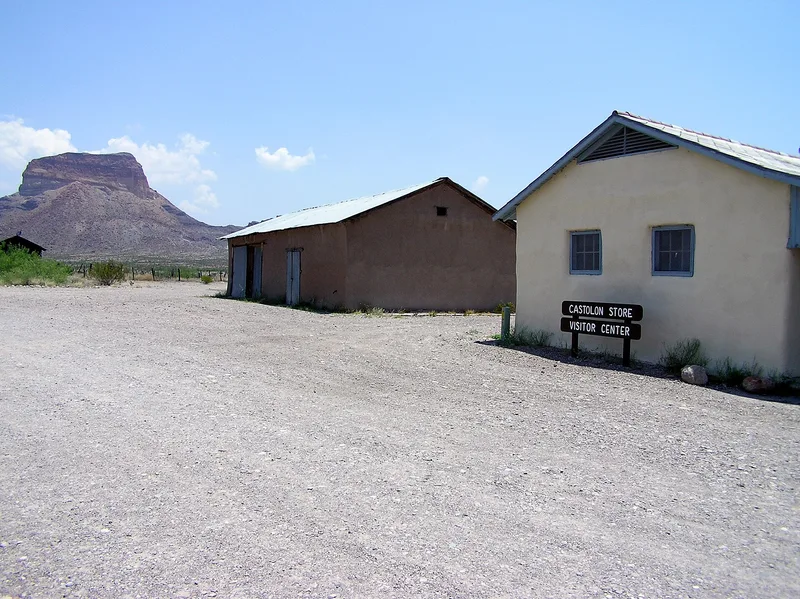
Castolon is a cluster of mostly adobe buildings on the Rio Grande in Big Bend National Park, Texas. It has two main parts: Old Castolon, with a store, cafe and residence, and shed, and the Castolon Army Compound, also called Camp Santa Helena, which has barracks, officers quarters, a recreation hall, latrine and granary. The Alvino Residence dates to about 1903 and is probably among the oldest structures in the park. The compound was built to garrison U.S. Cavalry patrols during border unrest linked to the Mexican Revolution and World War I, but tensions eased as it was completed, and the Army made little use of it. Commercial activity began around 1903 with a store, later run by Howard Perry and Wayne Cartledge under the name La Harmonia Enterprises, serving people on both sides of the border. The district was listed for what it shows of border relations, military history and local trade.
Significance in brief: The district is significant mainly for its link to United States-Mexico border relations. The Army compound was built to garrison cavalry patrols during border unrest tied to the Mexican Revolution and World War I, though it saw little use. The stores and ranch enterprise, especially under Wayne Cartledge, served residents on both sides of the border and promoted harmony between Anglo-American and Mexican-American communities.
Machine-generated summary. This summary was generated by a language model from the official nomination document and has not been reviewed line by line by an editor. It may contain errors. Check the source document before relying on any detail. Source: nomination document (PDF) · National Archives catalog entry. NRHP reference 74000276, listed September 6, 1974. Summary generated October 2026 (model claude-sonnet-5-5, prompt v1.0-2026-10-29, confidence medium).
Key facts
| Address | Along Rio Grande at jct. of Park Rtes. 5, 9, and 35, Big Bend National Park |
|---|---|
| County | Brewster County |
| Listed | September 6, 1974 |
| Reference number | 74000276 |
| Resource type | District |
| Period of significance | 1903-1961 |
| Areas of significance | Other, Commerce, Agriculture, Military |
| Level of significance | State |
| Status (as stated in the nomination) | Condition ranges from good to ruins. Buildings 616, 617 and 618 were restored by the National Park Service. Most Army buildings remain in use for store, residential, administrative and storage purposes. A later memo reports the cotton gin (BBH-609) was destroyed by Rio Grande flooding in October 1974. |
| Acreage | 800 |
| Coordinates | 29.13021, -103.51360 (NPS GIS) |
What listing means for this property
This is a historic district. Buildings within its boundary are either contributing (they add to the district's significance) or non-contributing. Owners of contributing income-producing buildings can claim the 20% federal rehabilitation tax credit; homeowners should look at state credits. National Register districts impose no design review by themselves; a local historic district ordinance, if one exists, does (the difference explained).
General information, not legal or tax advice. Rules change; confirm with your State Historic Preservation Office or a qualified adviser.
Sources and further reading
- National Park Service, National Register of Historic Places database (snapshot May 2026), reference 74000276.
- Nomination form (PDF, National Archives) — catalog entry
- Wikidata Q104031865
- This listing as JSON
Last updated October 2026. Found an error? See the editorial policy for how to report it.