Hanover Junction Railroad Station

Why it's listed
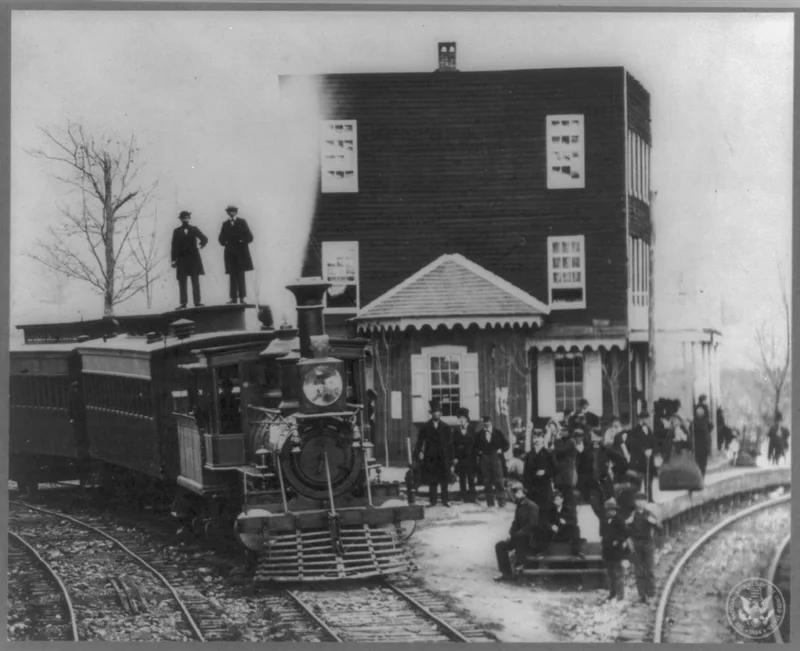
Built between 1852 and 1854 as a connector station for the Northern Central Railway, the rectangular frame building at Hanover Junction is three stories high, with one-story porches along its long walls. The station was the only surviving part of a major rail and telegraph center in south-central Pennsylvania, linking several feeder lines to the Northern Central corridor from the 1850s onward. It handled telegraph traffic and once housed a school for telegraphers. During the Gettysburg Campaign in 1863, Confederate cavalry destroyed the telegraph office, and the station later served as a depot for repair crews and as an aid station where wounded soldiers were processed on their way to hospitals. In November 1863, Abraham Lincoln passed through on his way to the Gettysburg dedication. The building is now abandoned, and its porches are decaying, though the structure is still sound.
Significance in brief: The station is the only surviving part of a once important rail and telegraph center. It is significant for its role in the 1863 Gettysburg Campaign, including the evacuation of wounded and its association with Abraham Lincoln's November 1863 journey to Gettysburg. The nomination also notes its telegraph history and its link to a 1950s controversy over photographs said to show Lincoln at the station.
Machine-generated summary. This summary was generated by a language model from the official nomination document and has not been reviewed line by line by an editor. It may contain errors. Check the source document before relying on any detail. Source: nomination document (PDF) · National Archives catalog entry. NRHP reference 83004258, listed December 29, 1983. Summary generated October 2026 (model claude-haiku-5-5, prompt v1.1-2026-10-29, confidence medium).
Key facts
| Address | PA 616, Hanover Junction |
|---|---|
| County | York County |
| Listed | December 29, 1983 |
| Reference number | 83004258 |
| Resource type | Building |
| Period of significance | 1852-54; 1863 |
| Criteria |
|
| Areas of significance | Military, Transportation, Communications |
| Level of significance | Local |
| Status (as stated in the nomination) | Abandoned; deteriorating but structurally sound, with its east porch rapidly decaying. |
| Acreage | 2.5 |
| Coordinates | 39.84370, -76.77683 (NPS GIS) |
What listing means for this property
For an income-producing building, listing (individually or as a contributing building in a district) is the gateway to the 20% federal rehabilitation tax credit on qualified rehabilitation costs, often stackable with state credits. Work claiming the credit must follow the Secretary of the Interior's Standards and be approved in advance.
Listing does not restrict a private owner acting without federal money or permits; where federal funding or licensing is involved, Section 106 review applies.
Noted as vacant in the nomination. Nomination documents can be decades old; current status may differ. If you are considering buying an empty listed property, read the due-diligence checklist.
General information, not legal or tax advice. Rules change; confirm with your State Historic Preservation Office or a qualified adviser.
Sources and further reading
- National Park Service, National Register of Historic Places database (snapshot May 2026), reference 83004258.
- Nomination form (PDF, National Archives) — catalog entry
- Wikipedia article (used for cross-checking only; text not reproduced here)
- Wikidata Q5649400
- This listing as JSON
Last updated October 2026. Found an error? See the editorial policy for how to report it.