New Kensington Downtown Historic District

Why it's listed
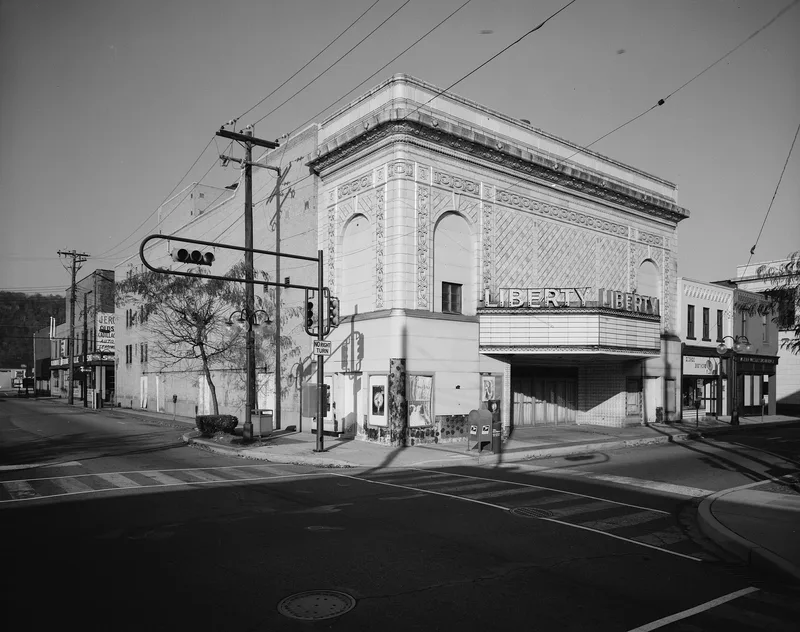
Downtown New Kensington is a grid of two- and three-story commercial blocks, residential streets and public buildings laid out when the city was platted in 1891. Its core runs along Fourth and Fifth Avenues between Eighth and Tenth Streets, where brick storefronts with bulkheads, display windows and decorative cornices line the sidewalks. Notable buildings include the Mellon Bank Building of 1900, the PNC Bank of 1914, and the Wear Ever Building of 1914-1915, designed by James Geisey in the Tudor Revival style for the cookware subsidiary of Alcoa. The district also holds the 1933 post office and three surviving theaters, among them the Ritz Theater of 1921-22. Its houses, mostly wood frame American Four Square and Colonial Revival types, were built largely between 1895 and 1920 for aluminum workers. The district is regarded as an example of a working class industrial community of the early twentieth century.
Significance in brief: The nomination argues the district is significant for Commerce, as a largely intact downtown that grew with the city from the 1890s to after World War II, and for Industry, through its ties to aluminum manufacturing and to the Alcoa workforce that lived and shopped there. It is also significant for Architecture as an example of early twentieth century commercial and residential building in southwestern Pennsylvania.
Machine-generated summary. This summary was generated by a language model from the official nomination document and has not been reviewed line by line by an editor. It may contain errors. Check the source document before relying on any detail. Source: nomination document (PDF) · National Archives catalog entry. NRHP reference 98000904, listed July 23, 1998. Summary generated October 2026 (model claude-haiku-5-5, prompt v1.1-2026-10-29, confidence medium).
Key facts
| Address | Roguhly bounded by 8th Ave., 3rd St., 11th Ave., and Barnes Ave., New Kensington |
|---|---|
| County | Westmoreland County |
| Listed | July 23, 1998 |
| Reference number | 98000904 |
| Resource type | District |
| Period of significance | 1891-1947 |
| Architect / builder | Geisey, James (architect, Wear Ever Building) |
| Architectural style | Colonial Revival, Art Deco, Beaux Arts, Italianate, Egyptian Revival, Gothic Revival, Craftsman, and others |
| Criteria |
|
| Areas of significance | Commerce, Industry, Architecture |
| Level of significance | Local |
| Status (as stated in the nomination) | Some commercial buildings have had storefronts replaced, and some buildings are currently vacant; the Liberty Theater was demolished in 1996. |
| Acreage | 19.7 |
| Coordinates | 40.56570, -79.76592 (NPS GIS) |
What listing means for this property
This is a historic district. Buildings within its boundary are either contributing (they add to the district's significance) or non-contributing. Owners of contributing income-producing buildings can claim the 20% federal rehabilitation tax credit; homeowners should look at state credits. National Register districts impose no design review by themselves; a local historic district ordinance, if one exists, does (the difference explained).
General information, not legal or tax advice. Rules change; confirm with your State Historic Preservation Office or a qualified adviser.
Sources and further reading
- National Park Service, National Register of Historic Places database (snapshot May 2026), reference 98000904.
- Nomination form (PDF, National Archives) — catalog entry
- Wikipedia article (used for cross-checking only; text not reproduced here)
- Wikidata Q7009644
- This listing as JSON
Last updated October 2026. Found an error? See the editorial policy for how to report it.