Ulery Mill
Also known as: Pollock's Mill

Why it's listed
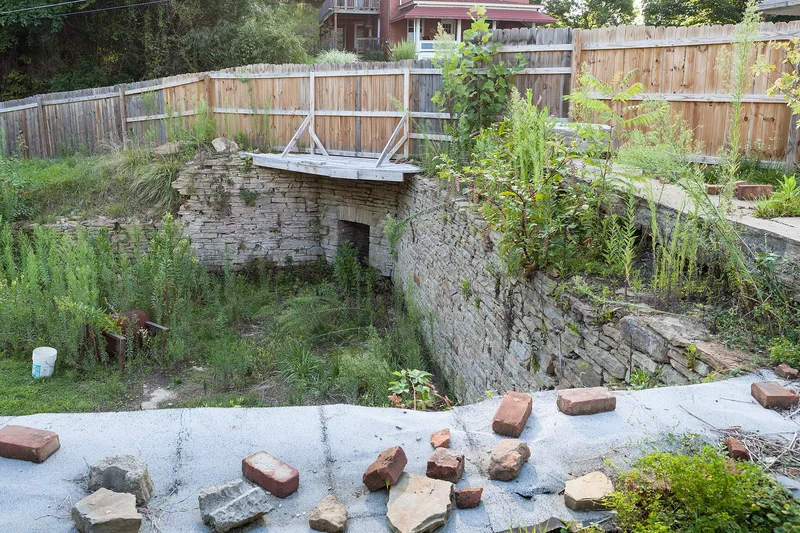
Built in 1835 by Jacob Ulery on Tenmile Creek in the village of Zollarville, this two-and-a-half-story brick gristmill rests on a stone foundation designed to bear the weight and motion of grinding stones. It was originally powered by a water wheel. Stephen Ulery, who inherited it, converted the mill to steam power and laid out the streets of the growing town in 1865. The mill was later operated by William Pollock until the early 1920s, then used by a later owner as a grocery store and butcher shop until 1963. Central loading doors on all three stories once carried grain into upper storage floors. The building is plain, with two-over-two sash windows and no exterior decoration. Its interest lies in being the only surviving one of several mills built along the creek in the early 1830s, and in its role grinding flour and meal for local markets and families. Its machinery has been removed, though an old millstone remains in the basement.
Significance in brief: The nomination argues the mill is significant as the only surviving one of several mills built along Tenmile Creek in the early 1830s, and as an example of an early gristmill that served the local farming community. Its water-powered operation was later converted to steam by Stephen Ulery.
Machine-generated summary. This summary was generated by a language model from the official nomination document and has not been reviewed line by line by an editor. It may contain errors. Check the source document before relying on any detail. Source: nomination document (PDF) · National Archives catalog entry. NRHP reference 78002481, listed April 20, 1978. Summary generated October 2026 (model claude-haiku-5-5, prompt v1.1-2026-10-29, confidence medium).
Key facts
| Address | SE of Marianna, Marianna |
|---|---|
| County | Washington County |
| Listed | April 20, 1978 |
| Reference number | 78002481 |
| Resource type | Building |
| Period of significance | 1835 |
| Architect / builder | Jacob Ulery (builder) |
| Areas of significance | Industry |
| Level of significance | Local |
| Status (as stated in the nomination) | The document states the mill is currently rented and used as an antique store; the mill is described as in good condition. |
| Acreage | 0.5 |
| Coordinates | 40.01119, -80.07534 (NPS GIS) |
What listing means for this property
For an income-producing building, listing (individually or as a contributing building in a district) is the gateway to the 20% federal rehabilitation tax credit on qualified rehabilitation costs, often stackable with state credits. Work claiming the credit must follow the Secretary of the Interior's Standards and be approved in advance.
Listing does not restrict a private owner acting without federal money or permits; where federal funding or licensing is involved, Section 106 review applies.
General information, not legal or tax advice. Rules change; confirm with your State Historic Preservation Office or a qualified adviser.
Sources and further reading
- National Park Service, National Register of Historic Places database (snapshot May 2026), reference 78002481.
- Nomination form (PDF, National Archives) — catalog entry
- Wikipedia article (used for cross-checking only; text not reproduced here)
- Wikidata Q16902265
- This listing as JSON
Last updated October 2026. Found an error? See the editorial policy for how to report it.