Parkinson, Robert, Farm

Why it's listed
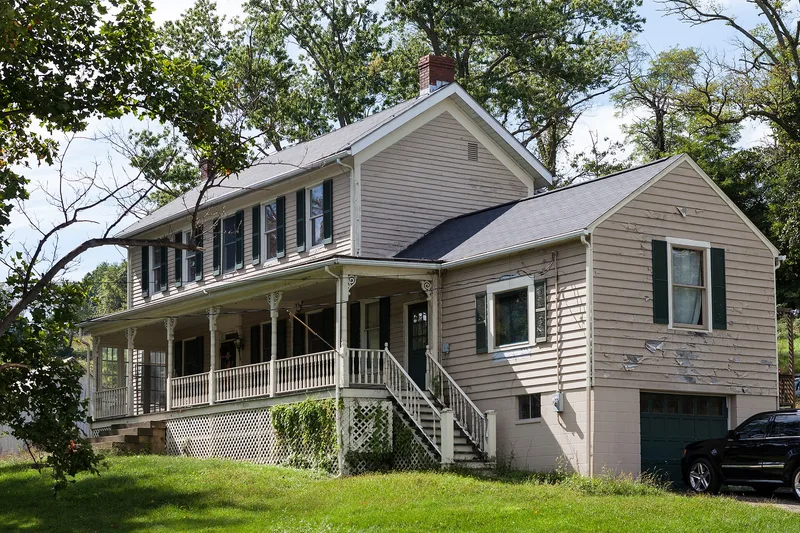
Built around 1830 in the Short Creek valley of Morris Township, Washington County, the Parkinson Farm covers 123 acres of pastures, hay fields and wood lots arranged much as they were historically. The farmstead includes a five-bay, center-passage farmhouse in a restrained Greek Revival style, a 1830 banked barn with a stone foundation and pegged frame, a sheep barn added about 1870, and a spring house. Robert Parkinson acquired the land in 1821, and his son Robert W. Parkinson expanded the holding and raised a large flock during the late nineteenth century. The farm is regarded as a rare example of an early sheep farm whose physical components changed little as the county moved toward stock raising and later dairy farming. Washington County was the leading sheep-farming county in the nation for much of the nineteenth century, and the farm reflects that regional economy. Its buildings and field layout document the transition from wheat to wool production.
Significance in brief: The nomination argues the farm is a strong example of Washington County's most important agricultural theme, sheep raising, and that its fields, buildings and layout changed little through the first half of the twentieth century. It is described as representative of early sheep farming patterns and of the early Greek Revival-influenced farmhouse type in the Morris Township settlement area.
Machine-generated summary. This summary was generated by a language model from the official nomination document and has not been reviewed line by line by an editor. It may contain errors. Check the source document before relying on any detail. Source: nomination document (PDF) · National Archives catalog entry. NRHP reference 01000603, listed July 15, 2002. Summary generated October 2026 (model claude-haiku-5-5, prompt v1.1-2026-10-29, confidence medium).
Key facts
| Address | PA 18, 0.4 mi. N of Old Concord Village, Morris Township |
|---|---|
| County | Washington County |
| Listed | July 15, 2002 |
| Reference number | 01000603 |
| Resource type | Building |
| Period of significance | C. 1830-1950 |
| Architectural style | Greek Revival |
| Criteria |
|
| Areas of significance | Agriculture |
| Level of significance | Local |
| Status (as stated in the nomination) | The farm was primarily a sheep farm until about 1960, when farming stopped for over a decade; hay fields are currently used by other farmers and the pasture is overgrown in places. |
| Acreage | 123 |
| Coordinates | 40.01235, -80.33324 (NPS GIS) |
What listing means for this property
National Register listing is honorary for a privately owned home: it does not by itself restrict what an owner may do with their own money, and it does not require public access. Restrictions come from local landmark or historic-district ordinances, which are separate (how they differ).
Owner-occupied houses are not eligible for the 20% federal rehabilitation tax credit, which applies to income-producing buildings, but many states offer credits for homeowners. Listing also opens the door to preservation easements and to buying a plaque. Start with what listing means for homeowners, renovating a listed house and selling one.
General information, not legal or tax advice. Rules change; confirm with your State Historic Preservation Office or a qualified adviser.
Sources and further reading
- National Park Service, National Register of Historic Places database (snapshot May 2026), reference 01000603.
- Nomination form (PDF, National Archives) — catalog entry
- Wikipedia article (used for cross-checking only; text not reproduced here)
- Wikidata Q7348294
- This listing as JSON
Last updated October 2026. Found an error? See the editorial policy for how to report it.