Christ Hamilton United Lutheran Church and Cemetery

Why it's listed
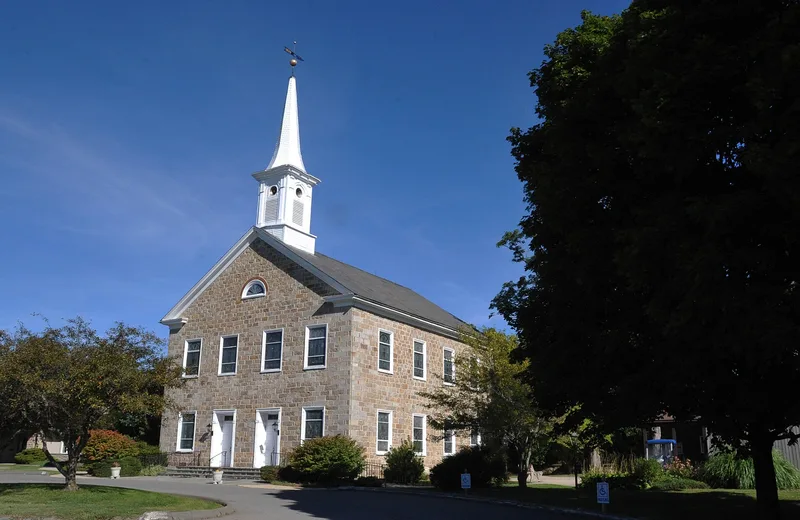
Built of native field stone in Hamilton Square, Monroe County, the church was designed by Henry Fenner and Peter Kester, with Levi M. Slutter as builder. The cornerstone was laid in 1829, and the building was completed and first used in November 1830 at a cost of about $4,300, funded largely by selling roughly 250 acres of church lands to area farmers. The congregation traces its formal beginning to 1768, and the nomination regards the church as the mother church of Lutheran and Reformed (United Church of Christ) congregations in the county. Its adjoining school was the first in the area, teaching in English and German. The enclosed cemetery holds 105 limestone headstones, mostly in German, with burials from 1793 to 1875, including eight Revolutionary War soldiers and some Civil War combatants. The interior features a balcony, a tracker-action organ, original pews, and stained glass in all 27 window wells. Burials ended in the mid 19th century because of high water tables and limited space.
Significance in brief: The nomination argues the church is the oldest church building in active use in the county and the mother church of Lutheran and Reformed (United Church of Christ) congregations there. It also cites the architecture as an accurate and substantially unchanged representation of its period, the first school in the area, and a cemetery with burials from 1793 to 1875 that includes Revolutionary War soldiers.
Machine-generated summary. This summary was generated by a language model from the official nomination document and has not been reviewed line by line by an editor. It may contain errors. Check the source document before relying on any detail. Source: nomination document (PDF) · National Archives catalog entry. NRHP reference 80003573, listed June 11, 1980. Summary generated October 2026 (model claude-haiku-5-5, prompt v1.1-2026-10-29, confidence medium).
Key facts
| Address | Bossardsville Rd., Hamilton Square |
|---|---|
| County | Monroe County |
| Listed | June 11, 1980 |
| Reference number | 80003573 |
| Resource type | District |
| Period of significance | 1800-1899 |
| Architect / builder | Henry Fenner and Peter Kester (architects); Levi M. Slutter (builder) |
| Criteria |
|
| Areas of significance | Education, Architecture, Religion |
| Level of significance | Local |
| Status (as stated in the nomination) | Church is in active use; the cemetery's burials were discontinued in the mid 19th century. |
| Acreage | 1.4 |
| Coordinates | 40.92599, -75.28966 (NPS GIS) |
What listing means for this property
This is a historic district. Buildings within its boundary are either contributing (they add to the district's significance) or non-contributing. Owners of contributing income-producing buildings can claim the 20% federal rehabilitation tax credit; homeowners should look at state credits. National Register districts impose no design review by themselves; a local historic district ordinance, if one exists, does (the difference explained).
General information, not legal or tax advice. Rules change; confirm with your State Historic Preservation Office or a qualified adviser.
Sources and further reading
- National Park Service, National Register of Historic Places database (snapshot May 2026), reference 80003573.
- Nomination form (PDF, National Archives) — catalog entry
- Wikipedia article (used for cross-checking only; text not reproduced here)
- Wikidata Q5108910
- This listing as JSON
Last updated October 2026. Found an error? See the editorial policy for how to report it.