Reading-Halls Station Bridge

Why it's listed
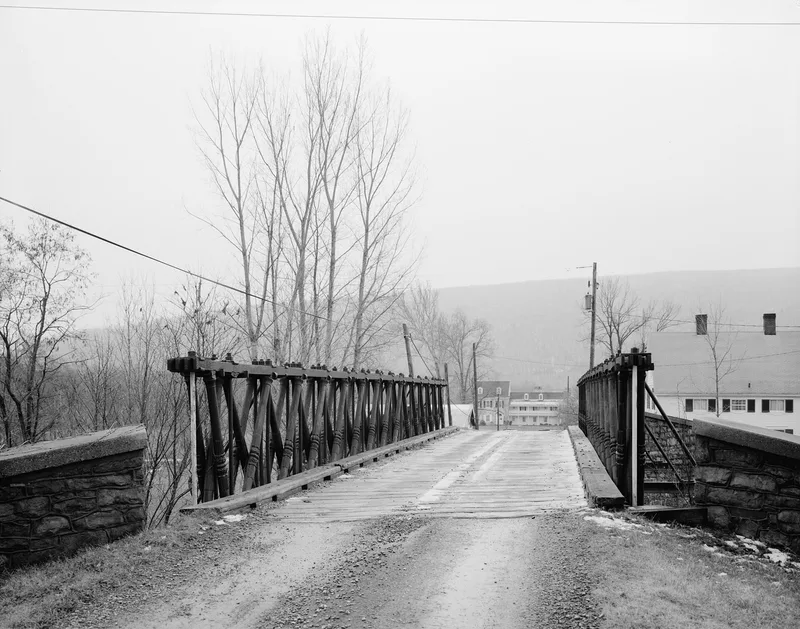
Built around 1850 as an all-metal pony Howe truss railroad bridge, the structure spans about 70 feet and uses hollow cast iron compression members paired with wrought iron tension members, joined by a pinning system at each panel. The form argues it was likely designed by Richard B. Osborne, chief engineer of the Philadelphia and Reading Railroad, and that it was probably re-erected at its present site around 1883-84 after being used elsewhere. Its significance lies in its early use of metal in railroad bridge construction at a time when wood and iron were giving way to all-metal designs. The nomination describes it as probably the oldest bridge of its type still in use in Pennsylvania. Cast iron proved weak for larger spans, and several early failures of such bridges contributed to their decline, making surviving examples rare. The bridge's 12-ton weight limit prevents some services, including fire protection, from using it, which the form identifies as a threat to its preservation.
Significance in brief: The nomination argues the bridge derives significance from its age, its architectural merits, and its representation of early transportation methods. It states that it is probably the oldest bridge of its type still in use in Pennsylvania and that it may be the sole working survivor of an early type of all-metal railroad construction. The form also notes its link to Richard B. Osborne's early all-metal bridge designs.
Machine-generated summary. This summary was generated by a language model from the official nomination document and has not been reviewed line by line by an editor. It may contain errors. Check the source document before relying on any detail. Source: nomination document (PDF) · National Archives catalog entry. NRHP reference 80003571, listed January 17, 1980. Summary generated October 2026 (model claude-haiku-5-5, prompt v1.1-2026-10-29, confidence medium).
Key facts
| Address | NW of Muncy off U.S. 220, Muncy |
|---|---|
| County | Lycoming County |
| Listed | January 17, 1980 |
| Reference number | 80003571 |
| Resource type | Structure |
| Period of significance | ca. 1850 |
| Architect / builder | Richard B. Osborne (chief engineer, Philadelphia and Reading Railroad), as the presumed designer and builder; the form does not confirm this attribution |
| Architectural style | Pony Howe truss (hollow cast iron compression members) |
| Areas of significance | Engineering, Transportation |
| Level of significance | National |
| Status (as stated in the nomination) | The bridge is altered and was moved; it is in use under a weight limit of 12 tons, which prohibits some services including fire protection. Abutments were recently remortared and are in excellent repair. |
| Acreage | 0.1 |
| Coordinates | 41.23587, -76.83250 (NPS GIS) |
What listing means for this property
For a publicly owned building or structure, listing mainly matters when federal funds, permits or licences are involved: projects then go through Section 106 review so effects on the property are considered. Listing also strengthens applications for preservation grants and, for leased income-producing uses, can enable the federal rehabilitation tax credit.
General information, not legal or tax advice. Rules change; confirm with your State Historic Preservation Office or a qualified adviser.
Sources and further reading
- National Park Service, National Register of Historic Places database (snapshot May 2026), reference 80003571.
- Nomination form (PDF, National Archives) — catalog entry
- Wikipedia article (used for cross-checking only; text not reproduced here)
- Wikidata Q7300453
- This listing as JSON
Last updated October 2026. Found an error? See the editorial policy for how to report it.