Leaser, Frederick and Catherine, Farm
Also known as: Leaser, Frederick, Farm

Why it's listed
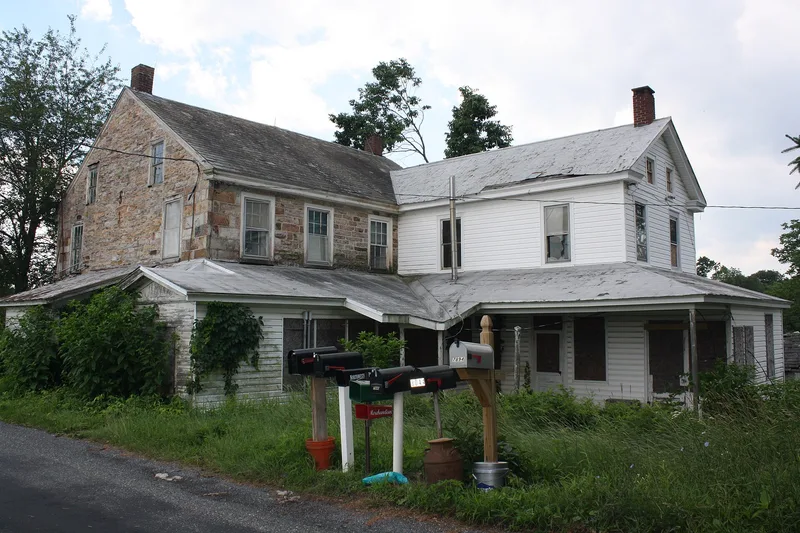
Located on Leaser Road in Lynn Township, western Lehigh County, this farmstead near the foot of the Blue Mountains grew from a log cabin believed to date to about 1750. Frederick and Catherine Leaser are associated with its early development. The farmhouse, built in 1849 of coursed local fieldstone by Daniel David Follweiler, is a five-bay Pennsylvania German vernacular house. An 1888 bank barn, a 1906 wagon shed and a corn crib added around 1910 complete the complex, which the nomination describes as a typical farm enclave. The farm is listed for its agricultural history and architecture. Family tradition holds that Frederick Leaser, returning from Philadelphia in 1777, helped move bells from the city, including the Liberty Bell, to safer locations in Allentown and Bethlehem. The property was farmed continuously, and it was converted to vineyard cultivation from 1999.
Significance in brief: The nomination argues the farm is significant for its association with agriculture in Lehigh County across seven generations of the Leaser family, and for its buildings as an example of a Lehigh County farmstead reflecting Pennsylvania German culture. It connects the family to the 1777 removal of bells from Philadelphia during the Revolutionary War.
Machine-generated summary. This summary was generated by a language model from the official nomination document and has not been reviewed line by line by an editor. It may contain errors. Check the source document before relying on any detail. Source: nomination document (PDF) · National Archives catalog entry. NRHP reference 03001420, listed January 14, 2004. Summary generated October 2026 (model claude-haiku-5-5, prompt v1.1-2026-10-29, confidence medium).
Key facts
| Address | 7654 Leaser Rd., Lynn Township |
|---|---|
| County | Lehigh County |
| Listed | January 14, 2004 |
| Reference number | 03001420 |
| Resource type | Building |
| Period of significance | c1750-1953 |
| Architectural style | Pennsylvania German Vernacular |
| Criteria |
|
| Areas of significance | Agriculture, Architecture |
| Level of significance | Local |
| Status (as stated in the nomination) | Farmhouse and buildings neglected during the 1990s lease period; buildings are unoccupied except the bank barn, which is used for vineyard storage. |
| Acreage | 76 |
| Coordinates | 40.67570, -75.84600 (NPS GIS) |
What listing means for this property
National Register listing is honorary for a privately owned home: it does not by itself restrict what an owner may do with their own money, and it does not require public access. Restrictions come from local landmark or historic-district ordinances, which are separate (how they differ).
Owner-occupied houses are not eligible for the 20% federal rehabilitation tax credit, which applies to income-producing buildings, but many states offer credits for homeowners. Listing also opens the door to preservation easements and to buying a plaque. Start with what listing means for homeowners, renovating a listed house and selling one.
Noted as vacant in the nomination. Nomination documents can be decades old; current status may differ. If you are considering buying an empty listed property, read the due-diligence checklist.
General information, not legal or tax advice. Rules change; confirm with your State Historic Preservation Office or a qualified adviser.
Sources and further reading
- National Park Service, National Register of Historic Places database (snapshot May 2026), reference 03001420.
- Nomination form (PDF, National Archives) — catalog entry
- Wikipedia article (used for cross-checking only; text not reproduced here)
- Wikidata Q5499176
- This listing as JSON
Last updated October 2026. Found an error? See the editorial policy for how to report it.