Colver Historic District

Why it's listed
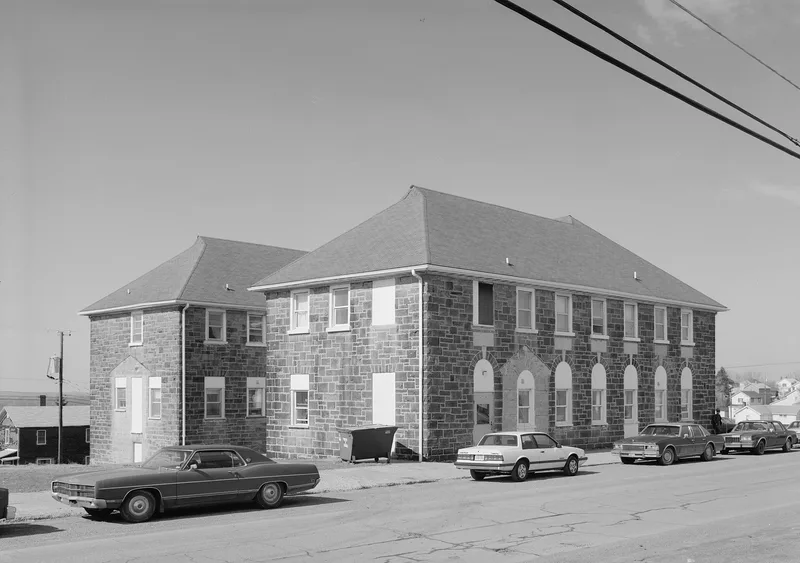
Built by the Ebensburg Coal Company between 1911 and 1913 on a rectangular grid plan, Colver is a coal mining community in Cambria Township, about seven miles northwest of Ebensburg. Its wood-frame miners' houses, set in uniform rows on stone foundations, were built in four types, and brick houses along Reese Avenue were erected for railroad workers. Company buildings on Reese Avenue include a stone company store dated 1912, with a 1914 addition by Horace Trumbauer, and the 1914 company office. The 1912 Colver Amusement Company theater and the stone Colver Hotel also stand there. The mine portal, power house, dynamite storage building and ponds survive at the mine site, and the Cambria and Indiana Railroad shops, with their headquarters and two roundhouses, remained in use until 1993. The district is regarded as one of the most intact coal patches in the region, with little infill and limited loss beyond Shanty Town.
Significance in brief: The district is significant for industry and community planning as a coal company town. It is described as a highly intact example of a planned coal patch, with detached wood-frame miners' housing, brick housing for railroad workers, and company commercial and mine buildings. Its layout and resources are compared favorably with other model coal patches in Pennsylvania.
Machine-generated summary. This summary was generated by a language model from the official nomination document and has not been reviewed line by line by an editor. It may contain errors. Check the source document before relying on any detail. Source: nomination document (PDF) · National Archives catalog entry. NRHP reference 94000521, listed June 3, 1994. Summary generated October 2026 (model claude-haiku-5-5, prompt v1.1-2026-10-29, confidence high).
Key facts
| Address | Roughly bounded by Ninth Ave., the Ebensburg Coal Company Power Building and Bakerville, Cambria Township, Colver |
|---|---|
| County | Cambria County |
| Listed | June 3, 1994 |
| Reference number | 94000521 |
| Resource type | District |
| Period of significance | 1910 - 1943 |
| Architect / builder | Jencks, S. H.; Trumbauer, Horace; Pennsylvania Lumber and Construction Co. |
| Criteria |
|
| Areas of significance | Community Planning and Development, Industry |
| Level of significance | State |
| Status (as stated in the nomination) | Shanty Town was destroyed during a 1970s strip-mining operation, and the Processing Plant was demolished in 1988; the Cambria and Indiana Railroad shops were operational until December 1993. |
| Acreage | 272 |
| Coordinates | 40.53977, -78.79764 (NPS GIS) |
What listing means for this property
This is a historic district. Buildings within its boundary are either contributing (they add to the district's significance) or non-contributing. Owners of contributing income-producing buildings can claim the 20% federal rehabilitation tax credit; homeowners should look at state credits. National Register districts impose no design review by themselves; a local historic district ordinance, if one exists, does (the difference explained).
General information, not legal or tax advice. Rules change; confirm with your State Historic Preservation Office or a qualified adviser.
Sources and further reading
- National Park Service, National Register of Historic Places database (snapshot May 2026), reference 94000521.
- Nomination form (PDF, National Archives) — catalog entry
- Wikipedia article (used for cross-checking only; text not reproduced here)
- Wikidata Q5150275
- This listing as JSON
Last updated October 2026. Found an error? See the editorial policy for how to report it.