Allegheny Portage Railroad National Historic Site
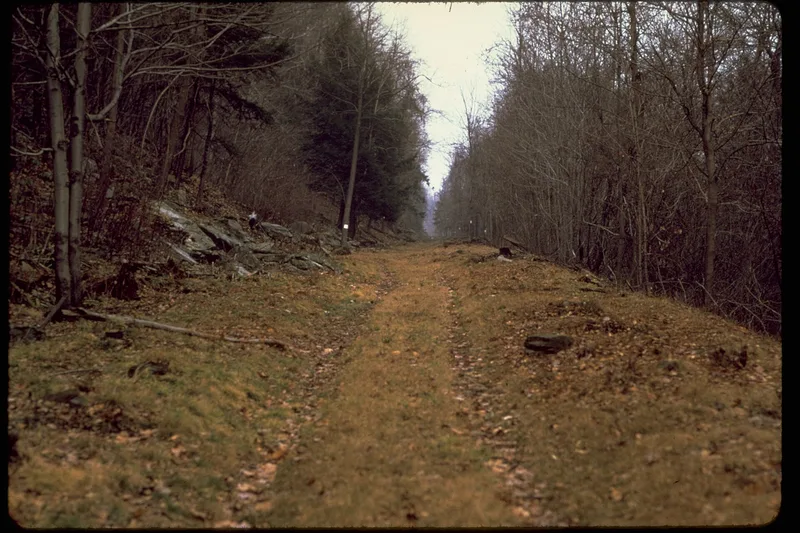

Why it's listed
Built between 1826 and 1834 across the Allegheny Mountains, the Allegheny Portage Railroad was a 36-mile route linking the eastern and western divisions of the Pennsylvania Canal between Hollidaysburg and Johnstown. Its ten inclined planes, five on each side of the summit, were powered by stationary steam engines that hauled cars on endless ropes, with four cars raised and lowered at once. Between the planes, horses and later steam locomotives moved the cars along a 13-mile long-level. Engineer John Dougherty's sectional boat system let canal boats ride on railroad flat cars over the mountain, allowing travelers to pass from Philadelphia to Pittsburgh without changing. The Staple Bend Tunnel, which may have been America's first railroad tunnel, and the Lemon House, where travelers spent the night at the summit, are the most significant surviving remains. The railroad was sold to the Pennsylvania Railroad Company in 1857.
Significance in brief: The nomination argues the railroad was an engineering accomplishment that linked the eastern and western sections of the Pennsylvania Canal across a mountain barrier, using inclined planes, stationary engines and a sectional boat system that let canal boats cross without unloading. It describes the Staple Bend Tunnel as possibly America's first railroad tunnel and compares the engineering favorably with European feats.
Machine-generated summary. This summary was generated by a language model from the official nomination document and has not been reviewed line by line by an editor. It may contain errors. Check the source document before relying on any detail. Source: nomination document (PDF) · National Archives catalog entry. NRHP reference 66000648, listed October 15, 1966. Summary generated October 2026 (model claude-haiku-5-5, prompt v1.1-2026-10-29, confidence medium).
Key facts
| Address | U.S. 22, Johnstown |
|---|---|
| County | Blair County |
| Listed | October 15, 1966 |
| Reference number | 66000648 |
| Resource type | District |
| Period of significance | 1826-1834 |
| Areas of significance | Commerce, Engineering, Transportation |
| Level of significance | National |
| National Historic Landmark | Yes, designated December 29, 1962 |
| Status (as stated in the nomination) | Most of the route is now built over by roads and modern railroads; surviving remains include the tunnel, the summit level with the Lemon House, and stone ties and culverts. |
| Acreage | 1134.9 |
| Coordinates | 40.45944, -78.55656 (NPS GIS) |
What listing means for this property
This is a historic district. Buildings within its boundary are either contributing (they add to the district's significance) or non-contributing. Owners of contributing income-producing buildings can claim the 20% federal rehabilitation tax credit; homeowners should look at state credits. National Register districts impose no design review by themselves; a local historic district ordinance, if one exists, does (the difference explained).
General information, not legal or tax advice. Rules change; confirm with your State Historic Preservation Office or a qualified adviser.
Sources and further reading
- National Park Service, National Register of Historic Places database (snapshot May 2026), reference 66000648.
- Nomination form (PDF, National Archives) — catalog entry
- Wikipedia article (used for cross-checking only; text not reproduced here)
- Wikidata Q2677208
- This listing as JSON
Last updated October 2026. Found an error? See the editorial policy for how to report it.