Cary Historic District

Why it's listed
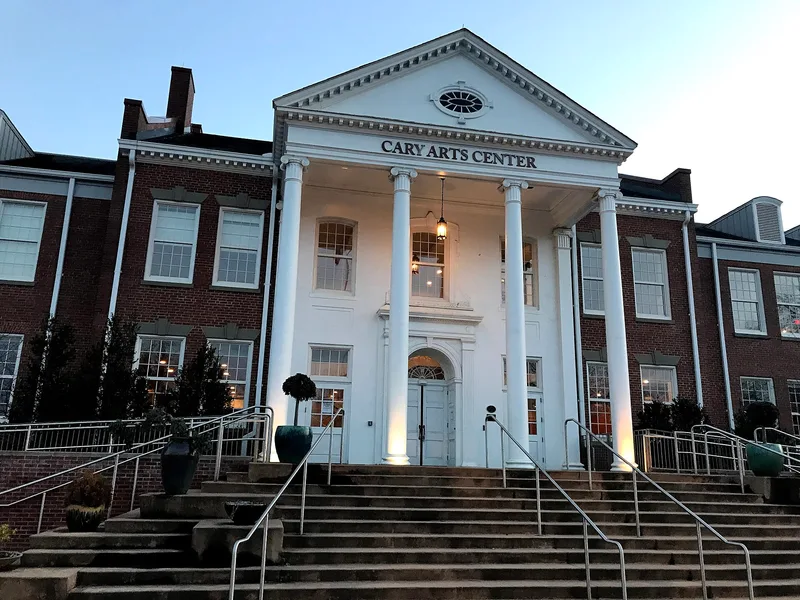
Cary's historic district lies two blocks south of the town's commercial center and is built around South Academy Street, which runs from the railroad toward a hill at the south end of town. Its thirty-nine contributing resources date from about 1890 to 1945 and include frame and brick-veneered bungalows, period cottages, Queen Anne and Craftsman houses, and outbuildings. The town grew from a railroad depot established in the 1850s and 1860s, and the district reflects that origin. Its visual focal point is the two-story red-brick former Cary High School, built in 1939 by the Works Progress Administration on the site of earlier school buildings. The school was founded in 1907 as the first public high school in Wake County, and nearby houses sheltered its principals, teachers, and students. The district is listed for its architecture and for its association with education in the town's history.
Significance in brief: The nomination argues the district is significant as an intact ensemble of small-town residential and educational architecture from about 1890 to 1945, reflecting Cary's development as a railroad village and educational center. It also ties the district to Cary High School, founded in 1907 as the first public high school in Wake County and regarded as one of the first public high schools in North Carolina.
Machine-generated summary. This summary was generated by a language model from the official nomination document and has not been reviewed line by line by an editor. It may contain errors. Check the source document before relying on any detail. Source: nomination document (PDF) · National Archives catalog entry. NRHP reference 01000425, listed April 25, 2001. Summary generated October 2026 (model claude-haiku-5-5, prompt v1.1-2026-10-29, confidence high).
Key facts
| Address | Roughly along Dry Ave., S. Academy St., and Park St., Cary |
|---|---|
| County | Wake County |
| Listed | April 25, 2001 |
| Reference number | 01000425 |
| Resource type | District |
| Period of significance | Ca. 1890 - 1945 |
| Architectural style | Late Victorian; Queen Anne; Bungalow/Craftsman; Colonial Revival; Tudor Revival; Classical Revival; Neoclassical Revival; I-house |
| Criteria |
|
| Areas of significance | Architecture, Education |
| Level of significance | Local |
| Status (as stated in the nomination) | Primarily residential; several former dwellings now serve as businesses and offices. |
| Acreage | 18 |
| Coordinates | 35.78598, -78.78195 (NPS GIS) |
What listing means for this property
This is a historic district. Buildings within its boundary are either contributing (they add to the district's significance) or non-contributing. Owners of contributing income-producing buildings can claim the 20% federal rehabilitation tax credit; homeowners should look at state credits. National Register districts impose no design review by themselves; a local historic district ordinance, if one exists, does (the difference explained).
General information, not legal or tax advice. Rules change; confirm with your State Historic Preservation Office or a qualified adviser.
Sources and further reading
- National Park Service, National Register of Historic Places database (snapshot May 2026), reference 01000425.
- Nomination form (PDF, National Archives) — catalog entry
- Wikipedia article (used for cross-checking only; text not reproduced here)
- Wikidata Q20203025
- This listing as JSON
Last updated October 2026. Found an error? See the editorial policy for how to report it.