Capehart, Thomas, House

Why it's listed
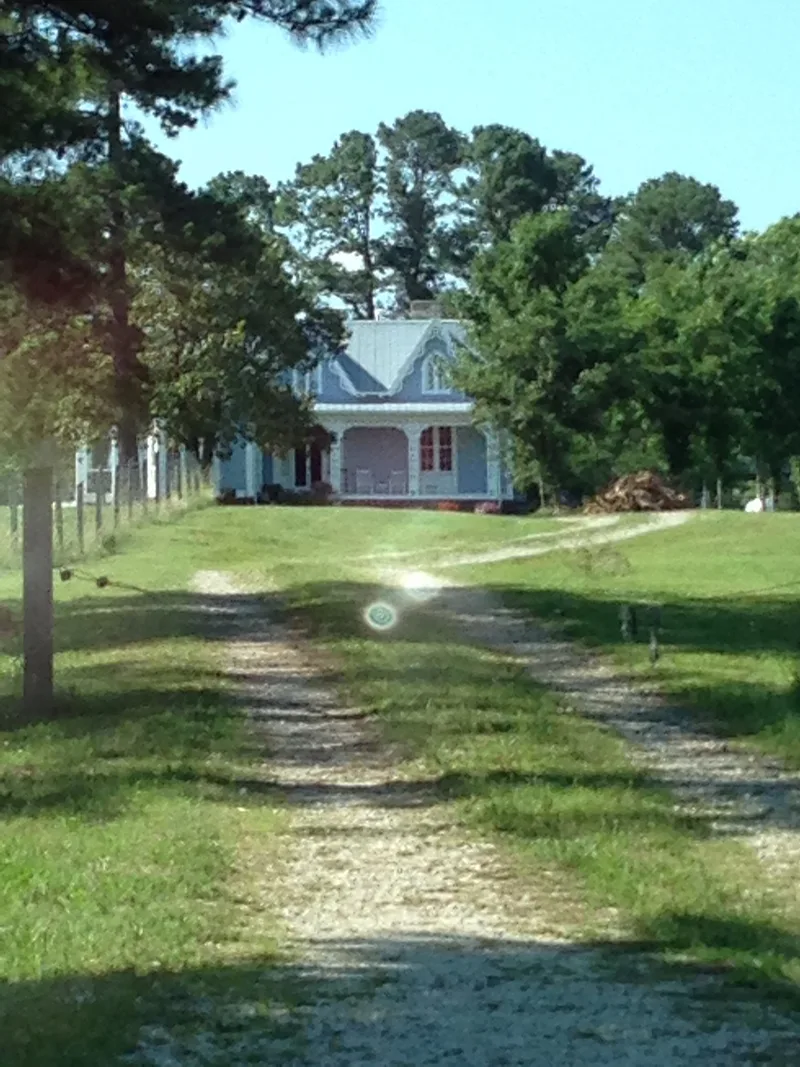
Set amid rolling farmland near Kittrell in Vance County, this small frame cottage was built between about 1866 and 1870 for Thomas Capehart. Capehart was a Confederate veteran who had served as an infantry lieutenant and artillery captain, and he settled in the area after buying about forty-two acres in 1866. The house follows the Gothic cottage type popularized by A. J. Downing. It has an L-shaped plan, board-and-batten walls, steep gables trimmed with sawn bargeboards, a lacy front porch and lancet windows filled with tracery. Several details, including the entrance frame and the stair, resemble the work of Warrenton builder Jacob Holt. Some of the ornament was replaced or reproduced during a recent renovation. Capehart farmed, kept a dry goods store, helped found St. James Episcopal Church and lived in the house until his death in 1919. The nomination treats the cottage as a rare surviving example of its style in North Carolina.
Significance in brief: The nomination argues the cottage is a well-preserved, rare example of the Downingesque Gothic domestic mode in North Carolina, with ornate sawn bargeboards and traceried lancet windows. Some features suggest the work of Warrenton builder Jacob Holt or an associate. It is also tied to Thomas Capehart, a Confederate veteran, farmer, merchant and founder of St. James Episcopal Church in Kittrell.
Machine-generated summary. This summary was generated by a language model from the official nomination document and has not been reviewed line by line by an editor. It may contain errors. Check the source document before relying on any detail. Source: nomination document (PDF) · National Archives catalog entry. NRHP reference 77001010, listed May 6, 1977. Summary generated October 2026 (model claude-sonnet-5-5, prompt v1.0-2026-10-29, confidence high).
Key facts
| Address | W of Kittrell on SR 1105, Kittrell |
|---|---|
| County | Vance County |
| Listed | May 6, 1977 |
| Reference number | 77001010 |
| Resource type | Building |
| Period of significance | ca. 1866-1870 |
| Architect / builder | Jacob Holt (attributed; features suggestive of his work and perhaps his associates) |
| Architectural style | Gothic Revival (Downingesque Gothic cottage) |
| Areas of significance | Architecture |
| Level of significance | State |
| Status (as stated in the nomination) | Private residence in occupied use, in excellent condition and altered; ornament intact or restored after recent renovation. |
| Acreage | 8 |
| Coordinates | 36.22965, -78.46664 (NPS GIS) |
What listing means for this property
National Register listing is honorary for a privately owned home: it does not by itself restrict what an owner may do with their own money, and it does not require public access. Restrictions come from local landmark or historic-district ordinances, which are separate (how they differ).
Owner-occupied houses are not eligible for the 20% federal rehabilitation tax credit, which applies to income-producing buildings, but many states offer credits for homeowners. Listing also opens the door to preservation easements and to buying a plaque. Start with what listing means for homeowners, renovating a listed house and selling one.
General information, not legal or tax advice. Rules change; confirm with your State Historic Preservation Office or a qualified adviser.
Sources and further reading
- National Park Service, National Register of Historic Places database (snapshot May 2026), reference 77001010.
- Nomination form (PDF, National Archives) — catalog entry
- Wikipedia article (used for cross-checking only; text not reproduced here)
- Wikidata Q20638907
- This listing as JSON
Last updated October 2026. Found an error? See the editorial policy for how to report it.