Main Street Commercial Historic District
Also known as: Seaboard Coast Line Passenger Depot
Main Street Commercial Historic District is a historic district in Hamlet, Richmond County, North Carolina, listed on the National Register of Historic Places on March 19, 1992 (reference number 92000169). The National Park Service records its significance in Community Planning and Development, Commerce, Transportation and Architecture at the local level.
Facts from the NPS National Register database (); nomination summary October 2026. Last updated . Sources for each fact.

The pin is a point inside the NPS boundary polygon, not a surveyed location.
Why it's listed
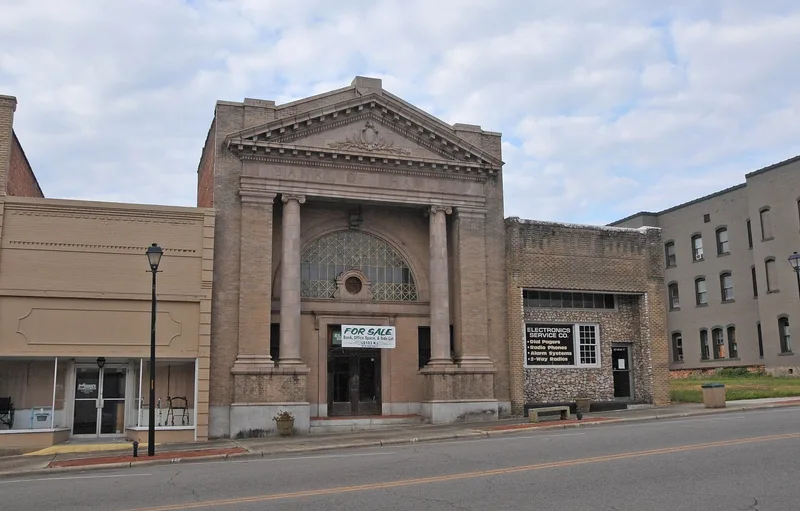
Brick commercial buildings line Main Street in Hamlet, a railway town in Richmond County, North Carolina. Most were built between 1900 and 1941, with the majority completed by about 1916. The district was largely developed by E.A. Lackey, a businessman, banker and real estate developer who settled in Hamlet in 1890 and opened Main Street in 1897. Its buildings include a 1912 Terminal Hotel with an octagonal tower, a 1912 Neo-Classical Bank of Hamlet, and the Hamlet Opera House, built in 1914 and remodeled in Art Deco style in 1927. The 1900 Seaboard Air Line passenger depot and a 1940 Works Progress Administration post office also stand within the district. The district is valued for its numerous unaltered storefronts, which reflect typical small-town commercial architecture of the period. It also reflects the growth of transportation and commerce after the railroads reached Hamlet in the late nineteenth century.
Significance in brief: The district is significant for its concentration of early twentieth-century brick commercial buildings, many with intact storefronts, developed largely by E.A. Lackey between 1900 and 1941. It is also tied to the growth of Hamlet as a railway center after the Seaboard Air Line built its depot in 1900, and to the work of Lackey as a businessman and developer. Several individual buildings, including the Bank of Hamlet and the Hamlet Opera House, are described as stylistically important.
Machine-generated summary. This summary was generated by a language model from the official nomination document and has not been reviewed line by line by an editor. It may contain errors. Check the source document before relying on any detail. Source: nomination document (PDF) · National Archives catalog entry. NRHP reference 92000169, listed March 19, 1992. Summary generated October 2026 (model claude-haiku-5-5, prompt v1.1-2026-10-29, confidence medium).
Key facts
| Official database NPS National Register database, ref. 92000169 , checked | |
|---|---|
| Address | 2--105 Main St., Hamlet |
| County | Richmond County |
| Listed | March 19, 1992 |
| Reference number | 92000169 |
| Resource type | District |
| Areas of significance | Community Planning and Development, Commerce, Transportation, Architecture |
| Level of significance | Local |
| National Historic Landmark | No |
| Acreage | 12 |
| Official document, machine-extracted Nomination form (National Archives) , checked | |
| Period of significance | 1900-1941 |
| Architectural style | Commercial Style; Queen Anne; Classical Revival; Art Deco |
| Criteria |
|
| Status (as stated in the nomination) | Many storefronts and upper facades remain intact; about half to two-thirds of the downtown area was occupied at the time of the nomination. |
| Official dataset NPS cultural-resource GIS (NRHP locations) | |
| Coordinates | 34.88378, -79.69945 |
What listing means for this property
This is a historic district. Buildings within its boundary are either contributing (they add to the district's significance) or non-contributing. Owners of contributing income-producing buildings can claim the 20% federal rehabilitation tax credit; homeowners should look at state credits. National Register districts impose no design review by themselves; a local historic district ordinance, if one exists, does (the difference explained).
General information, not legal or tax advice. Rules change; confirm with your State Historic Preservation Office or a qualified adviser.
Questions about Main Street Commercial Historic District
When was Main Street Commercial Historic District added to the National Register of Historic Places?
Main Street Commercial Historic District was listed on March 19, 1992. Its National Register reference number is 92000169.
Is Main Street Commercial Historic District a National Historic Landmark?
No. The National Park Service database (snapshot of May 2026) lists Main Street Commercial Historic District on the National Register but does not record it as a National Historic Landmark.
Where is Main Street Commercial Historic District?
2--105 Main St., Hamlet, Richmond County, North Carolina; coordinates 34.88378, -79.69945.
Why is Main Street Commercial Historic District historically significant?
According to a machine-generated summary of its nomination form: The district is significant for its concentration of early twentieth-century brick commercial buildings, many with intact storefronts, developed largely by E.A. Lackey between 1900 and 1941. It is also tied to the growth of Hamlet as a railway center after the Seaboard Air Line built its depot in 1900, and to the work of Lackey as a businessman and developer. Several individual buildings, including the Bank of Hamlet and the Hamlet Opera House, are described as stylistically important. Check the nomination document before relying on any detail.
Where can I read the original nomination for Main Street Commercial Historic District?
The nomination form is a public record held by the National Archives: nomination document (PDF).
Sources and further reading
- National Park Service, National Register of Historic Places database (snapshot May 2026), reference 92000169.
- Nomination form (PDF, National Archives) — catalog entry
- Wikipedia article (used for cross-checking only; text not reproduced here)
- Wikidata Q19817690
- This listing as JSON
Last updated November 2026. Found an error? See the editorial policy for how to report it.