Coleridge Historic District

Why it's listed
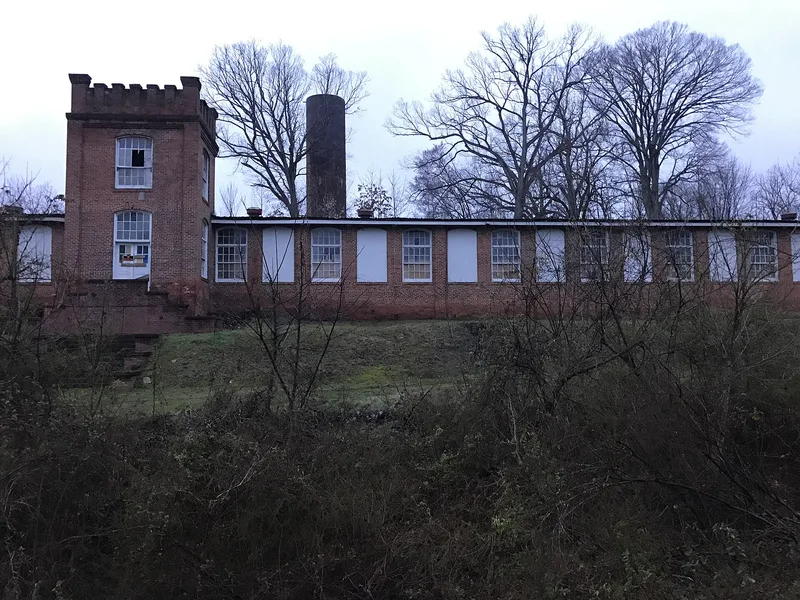
Coleridge is a Victorian mill village on a knoll above the Deep River in Randolph County, North Carolina. The Enterprise Manufacturing Company founded it in 1882 as the southernmost cotton mill on the river, and the site was first called Cole's Ridge. Its buildings, dating from 1882 to the late 1920s, include a brick cotton mill with Tudor Revival entrance towers, a company store, office, bank, warehouse, bending mill, steam plant, and rows of frame mill houses. A two-story Queen Anne house built around 1900 housed a mill manager. The company grew from 800 spindles to 6,000 by 1950, adding steam and hydroelectric power and a chair-making bending mill. It declined after 1950 and manufacturing stopped. The nomination values the village as a picturesque, largely intact riverside mill seat in one of the state's oldest manufacturing areas, with no intrusions. When described, the company store and post office still operated, while many other buildings stood abandoned.
Significance in brief: The nomination argues the village is one of the best-preserved turn-of-the-century textile mill villages in North Carolina. It was founded in 1882 as the southernmost cotton mill on the Deep River in Randolph County. Its Romanesque Revival and Queen Anne buildings include the mill, store, office, bank, warehouse, power plant and housing.
Machine-generated summary. This summary was generated by a language model from the official nomination document and has not been reviewed line by line by an editor. It may contain errors. Check the source document before relying on any detail. Source: nomination document (PDF) · National Archives catalog entry. NRHP reference 76001334, listed November 13, 1976. Summary generated October 2026 (model claude-sonnet-5-5, prompt v1.0-2026-10-29, confidence high).
Key facts
| Address | NC 22, Coleridge |
|---|---|
| County | Randolph County |
| Listed | November 13, 1976 |
| Reference number | 76001334 |
| Resource type | District |
| Period of significance | 1882, 1920s |
| Architectural style | Romanesque Revival and Queen Anne, with Tudor Revival entrance towers on the mill |
| Areas of significance | Industry |
| Level of significance | State |
| Status (as stated in the nomination) | Manufacturing has ended. The company store, post office, a portion of the mill and a few houses were still in use, and many other buildings were abandoned. |
| Acreage | 45 |
| Coordinates | 35.63995, -79.61658 (NPS GIS) |
What listing means for this property
This is a historic district. Buildings within its boundary are either contributing (they add to the district's significance) or non-contributing. Owners of contributing income-producing buildings can claim the 20% federal rehabilitation tax credit; homeowners should look at state credits. National Register districts impose no design review by themselves; a local historic district ordinance, if one exists, does (the difference explained).
General information, not legal or tax advice. Rules change; confirm with your State Historic Preservation Office or a qualified adviser.
Sources and further reading
- National Park Service, National Register of Historic Places database (snapshot May 2026), reference 76001334.
- Nomination form (PDF, National Archives) — catalog entry
- Wikipedia article (used for cross-checking only; text not reproduced here)
- Wikidata Q19865497
- This listing as JSON
Last updated October 2026. Found an error? See the editorial policy for how to report it.